Some time ago my co-worker Mike Harris came upon his mother-in-law's 1919 grammar text, Guide to Composition by James Finch Royster, Ph.D, Kenan Professor of English, University of North Carolina, and Stith Thompson, Ph.D, Professor of English in [sic] Colorado College. This slim, pocket-sized hardback contains 283 points of composition to delight and tantalize the grammarian.
Here is Royster and Thompson's No. 225:
Do not use a present participle unless it represents action of the same time as that of the main verb.
Examples
(Loose)
(1) He entered the university in 1911, finishing in 1915.
(Right)
(1) He entered the university in 1911 and finished in 1915.
(Wrong)
(2) He was an old man now, being born before the Civil War.
(Right)
(2) He was an old man now, having been born before the Civil War.
Note 1. -- A syntactical defense of the not uncommon construction seen in "He entered the university in 1911, finishing in 1915" has been proposed by assuming that the present participle finishing is not adjectival, but that it is a predicate, coordinate with entered. If this is true, we have a loosely articulated sentence -- two coordinate ideas expressed by verb forms of unequal rank.
Monday, April 7, 2008

Saturday, April 5, 2008
Allright already! More Yiddish -- a schlump and a schnook
from www.wordsmith.org
schlump (shlump) noun A dull or slovenly person.
[From Yiddish shlumperdik (unkempt, sloppy).]
"'You don't want to dress up too much, but you don't want to be a schlump,' says Michael Kors."
-- Hal Rubenstein; Terrific Style by Age, by Size, by Shape, by Color; In Style (New York); Aug 2006.
schnook (shnook) noun A stupid, easily deceived person.
[From Yiddish shnuk (snout) or from German schnucke (a small sheep).]
"A gun-toting schnook became an embarrassing crook when he robbed a Spokane dollar store Sunday. Seriously, if you're going to commit a Class A felony, you might as well rob a Class A joint."
-- Frank Sennett; Dollar-Store Thief Bucks Common Sense; Spokesman Review (Washington); Mar 9, 2007.
Friday, April 4, 2008
antinomian -- the law doesn't apply to me
Today we hit the David Brooks Daily Double. Here is another sentence from his column in today's Times:
"Dreams of economic opportunity and racial integration were swallowed up by the antinomian passions and social disorder."
an·ti·no·mi·an –noun [Origin: 1635–45; < style="FONT-VARIANT: small-caps" href="http://dictionary.reference.com/search?q=anti-" target="_blank">anti- + nómos law) + -ian]
1. a person who maintains that Christians are freed from the moral law by virtue of grace as set forth in the gospel.
adj.
1. of or relating to or denying the fixed meaning or universal applicability of moral law:
"By raising segregation and racial persecution to the ethical level of law, it puts into practice the antinomian rules of Orwell's world. Evil becomes good, inhumanity is interpreted as charity, egoism as compassion" (Elie Wiesel).
anodyne -- soothing, comforting, assuaging pain
From David Brooks' column in today's Times:
"By 1968, King was under harsh assault not only from white racists but from the black power movement, which regarded his tactics as outdated and anodyne."
anodyne - adj. [from the Greek anodynos - a + odyne (pain)]
serving to assuage pain
anodyne - n.
1: a drug that alleviates pain
2: something that soothes, calms, or comforts
Thursday, April 3, 2008
iambs and meter from J.C. Tressler
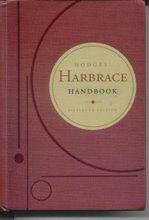
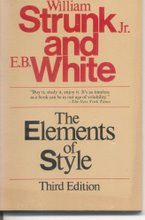
My colleague Mike Harris introduced me to an early 20th Century pedagogue who belongs in our Grammar Pantheon along with Strunk & White, Hodges, Royster, Cushwa, Ruge, et al.
Jacob C. Tressler published his thesis on "The Efficiency of Student Correction of Compositions" in 1912, based on methods developed at Boys' High School in Brooklyn. By 1936 he had a national reputation, as head of the English Department at Richmond Hill High School in New York and as the author of English In Action, Courses One through Five, which had sold more than a million copies, were used all over the country, and are still available on amazon.com for as little as $2 plus shipping.
"He pioneered a new emphasis in English textbooks," writes Henry I. Christ in "J.C. Tressler--A Brief Memoir, "--on making young people proficient in the actual use of English, not on trying to to create inept grammarians. He devised a dual organization of textbooks, with composition activities in one section and a reference handbook [the rules of grammar] in the second. . . .
"Tressler was an imposing presence. Physically, he towered over most people. When he entered a room, there were whispers of, 'There's Dr. Tressler.' He had a reserved personality, but there were depths of warmth and compassion known best to his closest friends and associates."
From Courses Three (1935) and Four (1940), it is plain that Tressler saw English teaching as intertwined with creating generally well-rounded people. The "composition activities" include public speaking (with a photo of coach Fritz Crisler talking to the Princeton football squad), conducting meetings, engaging in social conversation, putting out the school paper and yearbook, understanding "Personality and Human Relations" ("Skill helps build a self-confident personality," captions a photo of a lad using some sort of machine-tool), and many other tidbits.
Tressler's wonderful chapter on poetry explains meter wonderfully:
"When the rhythm is regular and conforms to a definite pattern, we say the line has meter. Each metrical line, or verse, is composed of feet, groups recurring accented and unaccented syllables.
"The commonly used feet are --
iambic . . . . . . u ' . . . . . . (ta tum') . . . . . . Marie'
anapestic . . . . . . u u ' . . . . . . (ta ta tum') . . . . . . to the brave'
trochaic . . . . . . ' u . . . . . . (tum' ta) . . . . . . Ma'ry
dactylic . . . . . . ' u u . . . . . . (tum' ta ta) . . . . . . Ma'rion
Dactyl is from the Greek word meaning finger. A finger has three bones, one longer than either of the others.
A verse is made up of one or more feet, and is named according to the type and number of feet. A verse having five iambic feet is called iambic pentameter.
u . ' . . u . . ' . . . . . . u . ' . . . . u . ' . . . . . . u . '
They al so serve who on ly stand and wait."
Wednesday, April 2, 2008
prithee -- archaic but still handy
from www.wordsmith.org
prithee (PRITH-ee) interjection
Please (used to express a request). [Contraction of (I) pray thee.]
"Probably it is because I am by profession a storyteller that I cannot resist a good tale, and it makes no matter if I end up telling it as a piece of fiction or as what calls itself truth. Just do not, I prithee, confuse me with a clam."
-- The Specialist Said; The Sunday Independent (Dublin, Ireland); May 28, 2006.
Tuesday, April 1, 2008
Long tall Candace

In the past couple of years, basketball announcers have started referring to tall players as being "long" or having great "length." In recent games we must have heard ESPN's Nancy Lieberman describe 6'6" Sylvia Fowles of LSU and 6' 5" Candace Parker of Tennessee this way 100 times.
Perhaps we just needed a change from our references to "height" (or "heighth," as many of us say) and "reach." Of course we've always called players like 5'2" Shannon Bobbitt "short" as well as "small," so why shouldn't we call the others "long" as well as "tall"?
Of course Little Richard Penniman understood this when he sang, "Long tall Sally, she's built for speed, she's got everything that Uncle John need."
(Yes, and Paul McCartney swallowed this lyric in his version, singing something like "Long tall sally, she's built sweet . . . " much as George Harrison morphed Carl Perkins' lyric in "Everybody's Tryin' to Be My Baby" from "Went out last night, didn't stay late, brought her home, had a nice teen date" into what sounds like "brought her home, had a nineteenth date.")
Subscribe to:
Posts (Atom)