Friday, October 31, 2008

Necromancy -- a good word for Halloween

from www.wordsmith.org
necromancy (NEK-ruh-man-see) noun

1. Divination by trying to communicate with the spirits of the dead.

2. Magic; sorcery; witchcraft.


[From Greek nekros (corpse) + -mancy (divination). Ultimately from Indo-European root nek- (death) that's also the source of nuisance,obnoxious, pernicious, innocent, innocuous, nectar, and nectarine.]


Before the word arrived in its current form, it was known as nigromantia in medieval Latin, from confusion of Greek nekro with Latin niger (black). Now you know why magic and sorcery are also known as the "black arts".


"A few years later, [Branaghstein] goes to university to study medical science, with a minor in necromancy."

-- Desson Howe; Creature Discomforts; The Washington Post; Nov 4, 1994.

Thursday, October 30, 2008

Most obscure Fab Four trivia fact ever - Death Cab for Cutie

I did not realize that the world needed another Beatles biography until I picked up Can't Buy Me Love by Jonathan Gould on the library "new books" shelf.
It is absolutely delightful, putting the ascent of the Fab Four into the context of the cultural and historical events and dissecting every song from a musical standpoint.
Gould is a drummer, musicologist, and fabulous writer, so he can explain that the opening chord of Hard Day's Night is a D-minor 11th and what that means (". . . as if a C-major triad were being played over a D-minor triad.")
We learn lots of the usual trivia (e.g., Linda McCartney’s motto in her high school yearbook was “Yen for Men"; and the band Decca signed instead of the Beatles was Brian Poole and the Tremeloes).
But one fact stands out as the most obscure bit of trivia ever -- namely, that the Bellingham, Washington, indie group Death Cab for Cutie gets its name from the title of a song performed by the Bonzo Dog Doo-Dah Band in the Beatles' not-so-great 1967 film Magical Mystery Tour.
This adds to the many details to be found in The Beatles: The Biography by Bob Spitz, a wonderful book with 860 pages of text and another hundred pages of footnotes notes sourcing virtually every quote.

Generally, Spitz did as promised and wiped away the sins of Albert Goldman's mean-spirited John Lennon biography, and I was sorry when I reached page 860. I wanted more.

Among hundreds of bit of trivia, I learned that I was wrong in thinking that George had tried out for John Lennon's skiffle band by playing Eddie Cochran's "Twenty Flight Rock." That was Paul. George played "Raunchy" for his audition.
I learned that Paul, in writing his song to comfort Julian Lennon (originally "Hey, Jules") got "Jude" from the sinister Rod Steiger character in Oklahoma!
And I'm embarrassed to say I never knew it was Ringo who says, "I got blisters on my fingers!" at the end of "Helter Skelter." (The group had implored the lovable Ringo to play as hard as he could to get the wild feeling of that song about a carnival ride, not knowing it would cause the Manson gang to go on a murder spree.)

Another thing about the Gould book -- I found only one error in the whole thing: at one point he incorrectly refers to the lyric "10,000 holes in Blackburn Lancashire." But then just a few sentences later Gould correctly refers to "4,000 holes in Blackburn Lancashire."
This contrasts to a handful of errors to be found in the Spitz tome. One was that Jackie DeShannon didn't write "Needles and Pins" for the Searchers, as Spitz offhandedly says she did. The late U.S. Congressman Sonny Bono and Jack Nitzsche wrote that song.

Then there's the section about George's rising to a new level as a songsmith with "Something" and "Here Comes the Sun," in which Spitz implies that George wrote "Everybody's Trying to Be My Baby." That was Carl Perkins, whose songs the Beatles recorded or performed more of (7) than anyone other than Chuck Berry (9).

I guess a sin of omission falls in a different category. But, on page 499, Spitz quotes Peter Brown saying that George wrote "Something" about his wife, Pattie Boyd, and Eric Clapton wrote "Darling, You Look Beautiful [sic] Tonight" about her. But Spitz fails to mention that Clapton also wrote "Layla" about her.
Since Spitz mentions in a note at the bottom of that page that Donovan wrote "Jennifer Juniper" about Pattie's sister Jenny, I say this information is pertinent in placing these sisters in a special Pantheon of Super Muses.

Wednesday, October 29, 2008

In honor of Pedro Martinez: "Who's" and "Whose"


Right: "Who's interested in finding out whose books these are?"
Right: "Who's your Daddy?" chanted the crowd at Yankee Stadium when Pedro Martinez, then with the Red Sox, came on in relief.
Right: Whose team won the ACLS?

Like "your" and "you're" and "its and it's," "whose" and "who's" are misused every day, I guess because the apostrophe makes you think "possessive."

Anyway --

"Who's" is a contraction of "who is."
"Whose" is the possessive pronoun.

"You're" is a contraction of "you are."
"Your" is the possessive pronoun.

"It's" is a contraction of "it is."
"Its" is the possessive pronoun.


Click here a full discussion of the expression "Who's your daddy?"

Click here for photos of Yankees fans taunting Pedro.

Tuesday, October 28, 2008

Parallelism: Use parallel structure to express matching ideas

SAT Question of the Day

The following sentence contains either a single error or no error at all. If the sentence contains an error, select the one underlined part that must be changed to make the sentence correct. If the sentence contains no error, select choice E.

Although not the
A
first animated feature film, Disney’s
B
Snow White and the Seven Dwarfs was the first animated film

to use up-to-the-minute techniques
C
as well as achieving widespread release.
D
No error
E

A. (A)
B. (B)
C. (C)
D. (D)
E. (E)

Parallelism : Use parallel structure to express matching ideas

Wrong: "The most important things in soccer are dribbling, passing and to know how to shoot."

The principle of parallelism in writing is simply that parts of a sentence performing the same logical function (i.e., doing the same work) must be of like construction.

So the sentence above should read: "The most important things in soccer are dribbling, passing and shooting." That way all the elements are gerunds, rather than one of them being an infinitive phrase.

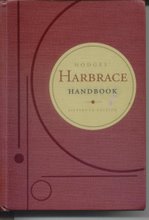
This is in section 26 of Harbrace, Parallelism, which includes

26 Use parallel structure as an aid to coherence, and

26a For parallel structure, balance a word with a word, a phrase with a phrase, a clause with a clause, a sentence with a sentence.

There are several other excellent editing rules in this section, along with many useful exercises. Learning this principle is an easy way to pick up a few points in the writing/grammar section of the PSAT or new SAT , as in the opening question and the following one:


As a Supreme Court justice, Thurgood Marshall
A
was known for his quest to end racial discrimination,
B
his opposition to the death penalty, and
C
he supported free speech and civil liberties.
D
No error
E

(A)
(B)
(C)
(D)
(E)

Monday, October 27, 2008

Internecine -- of internal struggles or fights to the death

"Things are so bad that the internecine warriors on the right have begun copying the rhetoric of the old left. In a Washington Times column this week upbraiding dissidents such as Brooks and Noonan, Tony Blankley, the conservative writer and activist, fell back on an old left slogan, asking them: 'Whose side are you on, comrade?' "
-- from a Washington Post column by E.J. Dionne Jr., Oct. 24, 2008

From The American Heritage® Dictionary of the English Language:

in·ter·nec·ine
(ntr-nsn, -n, -nsn) adj.
1. Of or relating to struggle within a nation, organization, or group.
2. Mutually destructive; ruinous or fatal to both sides.
3. Characterized by bloodshed or carnage.

Latin internecnus, destructive, variant of internecvus, from internecre, to slaughter : inter-, intensive pref.; see inter- + nex, nec-, death; see nek-1 in Indo-European roots.]

Word History:
When is a mistake not a mistake?
In language at least, the answer to this question is "When everyone adopts it," and on rare occasions, "When it's in the dictionary."
The word internecine presents a case in point. Today, it usually has the meaning "relating to internal struggle," but in its first recorded use in English, in 1663, it meant "fought to the death."
How it got from one sense to another is an interesting story in the history of English. The Latin source of the word, spelled both internecnus and internecvus, meant "fought to the death, murderous." It is a derivative of the verb necre, "to kill." The prefix inter- was here used not in the usual sense "between, mutual" but rather as an intensifier meaning "all the way, to the death."
This piece of knowledge was unknown to Samuel Johnson, however, when he was working on his great dictionary in the 18th century. He included internecine in his dictionary but misunderstood the prefix and defined the word as "endeavoring mutual destruction."
Johnson was not taken to task for this error. On the contrary, his dictionary was so popular and considered so authoritative that this error became widely adopted as correct usage. The error was further compounded when internecine acquired the sense "relating to internal struggle."
This story thus illustrates how dictionaries are often viewed as providing norms and how the ultimate arbiter in language, even for the dictionary itself, is popular usage.

The American Heritage® Dictionary of the English Language, Fourth Edition copyright ©2000 by Houghton Mifflin Company. Updated in 2003. Published by Houghton Mifflin Company. All rights reserved.

SAT Question of the Day -- subtle mind control?

As usual, the SAT Question of the Day below seems to be programming our youth. :-)

Choose the word or set of words that, when inserted in the sentence, best fits the meaning of the sentence as a whole.

The world, accustomed to ------- whenever governments change hands, expected rioting and bloodshed; but the transition of power was remarkably ------- .

A. turmoil . . chaotic
B. harmony . . orderly
C. ceremony . . solemn
D. violence . . uneventful
E. splendor . . unpopular

Friday, October 24, 2008

Flattery and sycophants


The SAT Question of the Day below reminds us of one of our favorite words -- sycophant -- and two of our favorite TV sycophants, Smithers and Eddie Haskell (right).


His inclination to succumb to flattery made him ------- to the ------- of people who wished to take advantage of him.


A. immune . . predilection
B. prejudicial . . intentions
C. susceptible . . cajolery
D. resistant . . blandishments
E. amenable . . rejection


sycophant n. a servile, self-seeking flatterer; a suck-up; a brown-nose; an a**-kisser
From the Greek word sykophantes and Latin word sycophanta for an informer or swindler.
Interesting that these words come down to us virtually unchanged over thousands of years. Perhaps sycophants have pretty much remained the same in different ages and cultures, so the word has remained the same as well.


The character Mr. Burns in The Simpsons would be lost without his trusty sycophant, Smithers.


sycophantic adj. of, relating to, or characteristic of a sycophant: fawning, obsequious

"Is that a new vacuum cleaner, Mrs. Cleaver?" asked the ever-sycophantic Eddie Haskell, adding, "Isn't it wonderful what they're doing with modern conveniences these days?"