from wordsmith.org
atone
PRONUNCIATION: (uh-TOHN, rhymes with phone)
MEANING: verb tr., intr.: To make amends for.
ETYMOLOGY: From the contraction of the phrase "at one" meaning "to be in harmony".
USAGE: "While society must be protected from those who might pose it a threat, it is vital we let people get on with their lives once they have atoned."Éamonn Mac Aodha; Minor Offenders Need More Help to Escape Spectre of Past Crime; The Irish Times (Dublin); Apr 28, 2009
Friday, May 29, 2009

Thursday, May 28, 2009
Would it kill you to write "such as"?
From today's New York Times:
"In the months leading up to Judge Sonia Sotomayor's selection this week, the White House methodically labored to apply lessons from years of nomination battles to control the process and avoid the pitfalls of the past, like appearing to respond to pressure from the party’s base or allowing candidates to be chewed up by friendly fire."
Plainly, we are losing the battle against "like" used as a conjunction (that is, with verbs, adverbs, phrases and clauses) in formal writing.
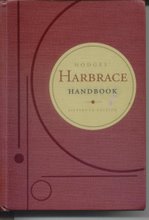
"Although widely used as a conjunction in spoken English," says Harbrace's Glossary of Usage, "as, as if, and as though are preferred for written English."
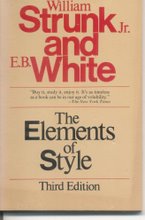
The Elements of Style weighs in on the issue as follows:
Like. Not to be used for as. Like governs nouns and pronouns; before phrases and clauses the equivalent word is as.
We spent the evening like in the old days. [should be as]
Chloe smells good, like a pretty girl should. [should be as]
The use of like for as has its defenders; they argue that any usage that achieves currency become valid automatically. This, they say, is the way language is formed. It is and it isn't.
An expression sometimes merely enjoys a vogue, much as an article of apparel does. Like has long been widely misused by the illiterate; lately it has been taken up by the knowing and the well-informed, who find it catchy, or liberating, and who use it as though they were slumming.
If every word or device that achieved currency were immediately authenticated, simply on the ground of popularity, the language would be as chaotic as a ball game with no foul lines.
For the student, perhaps the most useful thing to know about like is that most carefully edited publications regard its use before phrases and clauses as simple error.
"In the months leading up to Judge Sonia Sotomayor's selection this week, the White House methodically labored to apply lessons from years of nomination battles to control the process and avoid the pitfalls of the past, like appearing to respond to pressure from the party’s base or allowing candidates to be chewed up by friendly fire."
Plainly, we are losing the battle against "like" used as a conjunction (that is, with verbs, adverbs, phrases and clauses) in formal writing.
"Although widely used as a conjunction in spoken English," says Harbrace's Glossary of Usage, "as, as if, and as though are preferred for written English."
The Elements of Style weighs in on the issue as follows:
Like. Not to be used for as. Like governs nouns and pronouns; before phrases and clauses the equivalent word is as.
We spent the evening like in the old days. [should be as]
Chloe smells good, like a pretty girl should. [should be as]
The use of like for as has its defenders; they argue that any usage that achieves currency become valid automatically. This, they say, is the way language is formed. It is and it isn't.
An expression sometimes merely enjoys a vogue, much as an article of apparel does. Like has long been widely misused by the illiterate; lately it has been taken up by the knowing and the well-informed, who find it catchy, or liberating, and who use it as though they were slumming.
If every word or device that achieved currency were immediately authenticated, simply on the ground of popularity, the language would be as chaotic as a ball game with no foul lines.
For the student, perhaps the most useful thing to know about like is that most carefully edited publications regard its use before phrases and clauses as simple error.
Saturday, May 23, 2009
Charlotte Cheever Cushwa Clark (1917-2009)
 Charlotte Cheever Cushwa Clark, 91, of Harwich Port, Mass., an accomplished artist in watercolor, oil, pastel and lithograph prints; mother of six, grandmother of 14, and great-grandmother of five; died of heart failure, in East Harwich, Mass., May 21.
She was preceded in death by her husband of 54 years, the Rev. Bayard S. Clark, who died in 1994.
She is survived by her brother, William T. Cushwa of Agawam, Mass., and her six children and their spouses, Mr. & Mrs. Tom F. and Katharine C. Lord of Houston, Texas; W. Tucker Clark of Westport, Conn.; Mr. & Mrs. B. Stockton Clark Jr. of Hamden, Conn.; Mr. & Mrs. Franklin Taylor Clark of Washington, D.C.; G. Rockwood Clark and Mary Larkin of Harwich, Mass.; and Mr. & Mrs. N. Brooks Clark of Knoxville, Tenn.
She had 14 grandchildren and five great grandchildren.
Charlotte Cheever Cushwa was born Sept. 5, 1917, in Exeter, N.H. Her father, Frank W. Cushwa, was the Odlin Professor of English at the Phillips Exeter Academy and the author of An Introduction to Conrad (1933) and, with Robert N. Cunningham, Ways of Thinking and Writing (1936).
Her mother, Elizabeth Tucker Cushwa, was a daughter of Dr. William Jewett Tucker, president of Dartmouth College from 1893 to 1909.
Her great grandfather the Rev. Henry T. Cheever of Worcester, Mass., was mentioned and quoted in Moby-Dick as author of the 1849 book The Whale and His Captors. Cheever had journeyed to the South Seas as a missionary in 1840 and written several books about his experiences.
Charlotte graduated from Smith College in 1940, where she majored in painting. She was married to Bayard S. Clark of Philadelphia on June 21, 1941, in Cambridge, Mass.
Their first child, Katharine Conger Clark, was born in Philadelphia Dec. 15, 1942.
Bayard graduated from the Virginia Theological Seminary in 1945. His first assignment was to St. Louis, Mo. Over the next two decades, while rearing a growing family, Charlotte was a rector’s wife in Cape Girardeau, Mo., Houston, Tex., Nashville, Tenn., and then Washington, D.C., where Rev. Clark served as a canon at the National Cathedral from 1960 to ’65.
She and Bayard first heard Martin Luther King speak in 1957 at Scarritt College in Nashville, shortly after the formation of the Southern Christian Leadership Conference, of which Bayard had attended the first convention, in Montgomery, Ala. In 1960, Bayard introduced Dr. King to a meeting of the Nashville Ministerial Association. He was present at the Lincoln Memorial for the “I Have a Dream” speech in 1963 and marched in Selma in 1965. Charlotte heard the last Sunday sermon of Dr. King’s life, at the Washington National Cathedral on March 31, 1968.
Between 1962 and 1970, Charlotte earned her MFA in Painting and the History of Art from American University. In the years thereafter she was a member of and took part in shows with numerous art groups, including the Watercolor Society, the Art Barn, the Art League of Washington, and the Washington Printmakers. She also taught art at John Eaton School and the YWCA, and Art History at the National School of Ballet of Washington.
In 1991, Charlotte and Bayard Clark became year-round residents of Harwich Port, Mass., where Charlotte had spent summers since 1928.
In the 15 years since Bayard’s death, Charlotte had enjoyed keeping up with the births, graduations, and weddings among her extended family and remarkable circle of friends.
She was a member of the Garden Club of Harwich, the Guild of Harwich Artists, the Printmakers of Cape Cod, and a the Chatham Newcomers Club.
She was a loyal member of Christ Church Episcopal, Harwich Port, where she attended services just weeks before her death and where her funeral was held on Sunday, May 24.
Tuesday, May 12, 2009
Avoid the awkward use of "it" near another "it" with a different meaning
Old editions of Harbrace had a note under Rule 28D that read as follows: Avoid the confusion arising from the repetition in the same sentence of a pronoun referring to different antecedents.
CONFUSING Although it is very hot by the lake, it looks inviting. [The first it is an idiomatic pronoun; the second it refers to lake.]
CLEAR Although it is very hot by the lake, the water looks inviting.
Newer editions state it [this note] a little more specifically: Avoid the awkward placement of it near another it with a different meaning.
AWKWARD It would be unwise to buy the new model now, but it is a superior machine. [The first it is an expletive. The second it refers to model.]
REVISED Buying the new model now would be unwise, but it is a superior machine.
CONFUSING Although it is very hot by the lake, it looks inviting. [The first it is an idiomatic pronoun; the second it refers to lake.]
CLEAR Although it is very hot by the lake, the water looks inviting.
Newer editions state it [this note] a little more specifically: Avoid the awkward placement of it near another it with a different meaning.
AWKWARD It would be unwise to buy the new model now, but it is a superior machine. [The first it is an expletive. The second it refers to model.]
REVISED Buying the new model now would be unwise, but it is a superior machine.
Monday, May 11, 2009
The Lost Art of Diagramming Sentences
Friday, May 8, 2009
While -- a comma makes it mean "whereas"

from Ruge Rules
The Rule: "While" can be used to mean "during the time that," and it can be used to mean "whereas."
In the former case, while is not preceded by a comma.
In the latter case, while must be preceded by a comma.
So: I can't study while my little brother is beating on his drum.
And: The Blue Ridge mountains are beautiful, while the Rockies are grand.
Purists and copyeditors tend to frown on the use of "while" to mean "whereas," because the meaning depends upon the comma and points of punctuation have a perverse way of not being where they should be. If you choose to use "while" to mean "whereas," it's important to be assiduous in your punctuation.
The Rule: "While" can be used to mean "during the time that," and it can be used to mean "whereas."
In the former case, while is not preceded by a comma.
In the latter case, while must be preceded by a comma.
So: I can't study while my little brother is beating on his drum.
And: The Blue Ridge mountains are beautiful, while the Rockies are grand.
Purists and copyeditors tend to frown on the use of "while" to mean "whereas," because the meaning depends upon the comma and points of punctuation have a perverse way of not being where they should be. If you choose to use "while" to mean "whereas," it's important to be assiduous in your punctuation.
Thursday, May 7, 2009
Exorable -- capable of being persuaded
from wordsmith.org
exorable
EK-suhr-uh-buhl
adjective: Capable of being persuaded or moved.
From Latin exorare (to prevail upon), from ex- (out) + orare (to pray, beg).
"Without reform, the result is an exorable middle-class tax increase."Jonathan Rauch; A Bad Tax With Good Timing; National Journal (Washington, DC); Mar 18, 2006.
exorable
EK-suhr-uh-buhl
adjective: Capable of being persuaded or moved.
From Latin exorare (to prevail upon), from ex- (out) + orare (to pray, beg).
"Without reform, the result is an exorable middle-class tax increase."Jonathan Rauch; A Bad Tax With Good Timing; National Journal (Washington, DC); Mar 18, 2006.
Subscribe to:
Posts (Atom)