Tuesday, June 30, 2009

SLANT -- and how to be the Professor's Pet

A couple of years ago there was a New York Times Magazine story (and a reference to it in David Brooks' column) about successful inner-city charter schools whose pupils are required to SLANT -- Sit up, Listen, Ask questions, Nod, and Track the teacher with their eyes.

This behavior, say educators, is intuitively understood by middle-class kids but must be specifically itemized for those from less advantaged backgrounds.

At one point in the Times' story, the teacher asked the kids to affect the "normal school look." They immediately slouched in their seats and started talking, goofing off and staring into space. The kids, wrote Paul Tough, "seem to be experiencing the pleasure of being let in on a joke."

On a similar theme, the Key Club magazine, Keynotes, ran a feature "Professor's Pet -- High school rules won't cut it. Here are eight tips for making the grade in college." Here again, these tips aren't the Secrets of Dendur, but they can be valuable for kids getting ready for the new expectations of college.

To be the Prof's Pet --

  1. Show up!
  2. Make sure the professor knows you
  3. Be at the head of the class
  4. Prepare
  5. Participate
  6. Take advantage of office hours **(my favorite, discovered a couple of years late)
  7. Keep you attitude in check
  8. Be polite

Semaphore -- signaling with flags


Last night's Final Jeopardy question was, “Fittingly, the cover of this Beatles album shows the Fab Four engaging in a semaphore message.”

semaphore noun [from the Greek sema (sign, signal) + phore (carrying)]


1. an apparatus for visual signalling (as by the position of one or more movable arms)

2. a system of visual signaling by two flags held one in each hand

Jeopardy host Alex Trebek noted that the Moptops' semaphore letters actually spelled N-V-U-J because H-E-L-P didn't look particularly aesthetically pleasing.

Wednesday, June 24, 2009

Sanguine -- bloody cheerful

sanguine

PRONUNCIATION: (SANG-gwin)

adjective:
1. Cheerfully optimistic or confident.
2. Having a healthy reddish color.
3. Blood-red.

ETYMOLOGY: From Old French sanguin, from Latin sanguineus (bloody), from sanguis (blood).

USAGE: "As usual, Phillips is sanguine: Michael is totally focused now, and the insurance wasn't a problem, it was just expensive."Robert Sandall; Will Michael Jackson Survive His Concert Marathon? The Sunday Times (London, UK); May 31, 2009.

Tuesday, June 23, 2009

Eleemosynary -- charitable

from wordsmith.org

eleemosynary

PRONUNCIATION: (el-uh-MOS-uh-ner-ee, el-ee-, -MOZ-)

MEANING: adjective: Relating to charity.

ETYMOLOGY: From Latin eleemosynarius, from eleemosyna (alms), from Greek eleemosyne (pity, charity), from eleemon (pitiful), from eleos (pity).

USAGE: "The Guzmans started their non-profit organization, Path of Hope Foundation, 18 years ago. Their single goal: to care for the poor who live near their corner. The Thanksgiving dinner is one of their eleemosynary events."
-- Lynn Seeden; Free Thanksgiving Dinner Feeds 1,400; Orange County Register (Santa Ana, California); Dec 4, 2003.

Friday, June 19, 2009

Martinet -- one so strict as to earn a fragging


from wordsmith.org


martinet


PRONUNCIATION:

(mar-ti-NET, MAR-ti-net)


MEANING:

noun: A strict disciplinarian.


ETYMOLOGY: After Jean Martinet, an army officer during the reign of Louis XIV in France. He was a tough drill master known for his strict adherence to rules and discipline. He was killed by friendly fire during the siege of Duisburg in 1672 (see photo).


USAGE:

"Many people believe the agency acts like a martinet. They say the agency is hard-headed and hard-hearted. They say it is dictatorial and unyielding."APA Motives Commendable; Press-Republican (Plattsburgh, New York); May 11, 2009.

Friday, May 29, 2009

Atone -- finding the harmony of being "at one"

from wordsmith.org

atone

PRONUNCIATION: (uh-TOHN, rhymes with phone)

MEANING: verb tr., intr.: To make amends for.

ETYMOLOGY: From the contraction of the phrase "at one" meaning "to be in harmony".

USAGE: "While society must be protected from those who might pose it a threat, it is vital we let people get on with their lives once they have atoned."Éamonn Mac Aodha; Minor Offenders Need More Help to Escape Spectre of Past Crime; The Irish Times (Dublin); Apr 28, 2009

Thursday, May 28, 2009

Would it kill you to write "such as"?

From today's New York Times:
"In the months leading up to Judge Sonia Sotomayor's selection this week, the White House methodically labored to apply lessons from years of nomination battles to control the process and avoid the pitfalls of the past, like appearing to respond to pressure from the party’s base or allowing candidates to be chewed up by friendly fire."

Plainly, we are losing the battle against "like" used as a conjunction (that is, with verbs, adverbs, phrases and clauses) in formal writing.

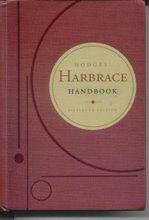
"Although widely used as a conjunction in spoken English," says Harbrace's Glossary of Usage, "as, as if, and as though are preferred for written English."

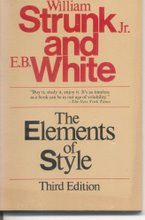
The Elements of Style weighs in on the issue as follows:

Like. Not to be used for as. Like governs nouns and pronouns; before phrases and clauses the equivalent word is as.

We spent the evening like in the old days. [should be as]

Chloe smells good, like a pretty girl should. [should be as]

The use of like for as has its defenders; they argue that any usage that achieves currency become valid automatically. This, they say, is the way language is formed. It is and it isn't.

An expression sometimes merely enjoys a vogue, much as an article of apparel does. Like has long been widely misused by the illiterate; lately it has been taken up by the knowing and the well-informed, who find it catchy, or liberating, and who use it as though they were slumming.

If every word or device that achieved currency were immediately authenticated, simply on the ground of popularity, the language would be as chaotic as a ball game with no foul lines.

For the student, perhaps the most useful thing to know about like is that most carefully edited publications regard its use before phrases and clauses as simple error.