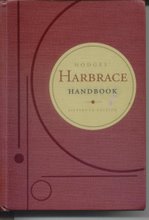
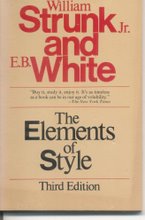
From "A Plain English Handbook," put out by the Securities and Exchange Commission to encourage Wall Street denizens to make their stock and bond offerings halfway intelligible to the public:
Find Hidden Verbs
Does a sentence use any form of the verbs "to be," "to have," or another weak verb, with a noun that could be turned into a strong verb? In the sentences below, the strong verb lies hidden in a nominalization, a noun derived from a verb that usually ends in -tion. As you change nouns to verbs, your writing becomes more vigorous and less abstract.
before ................................ after
We made an application... . . . . . . We applied...
We made a determination... . . . . . We determined...
We will make a distribution... .. . . . We will distribute...
before
We will provide appropriate information to shareholders concerning ....
after
We will inform shareholders about ...
before
We will have no stock ownership of the company.
after
We will own no company stock.
before
There is the possibility of prior Board approval of these investments.
after
The Board might approve these investments in advance.
Thursday, September 26, 2013

Tuesday, August 13, 2013
Growing Future Leaders: Why Western Parents Need to Adopt an Emerging-Market Mind-Set
By Susan Cramm (from Strategy + Business)
I remember the lazy days of my childhood summers, languishing in the grass, bored but too tired to move after spending most of the day in the community pool. No summer school for me. When I applied to college, anything above a 3.2 grade point average gained automatic admittance to a University of California school. Nobody asked, or cared, about my (nonexistent) extracurricular activities. And, even amid a recession, I left graduate school with a good-paying job and little concern about security.
The world isn’t so simple now. Although many of us—especially those raised in the U.S.—grew up in a world full of choice, our children are growing up in a world full of competition. We can’t give our children our past, but we can help them create a future by adopting an emerging-market mind-set that creates choices by making them more competitive.
Read more.
Wednesday, March 6, 2013
Andrew Mason flails on the subjunctive
Erstwhile Groupon CEO Andrew Mason charmed employees by sending them a "genuine" letter announcing that he'd been fired and, like Evita, asking them not to cry for him.
Mason may have TMIed (a new coinage?) when he revealed that he was hoping to go to a fat farm and lose 40 pounds, but the sadder revelation was that he, a Northwestern graduate, lacks a working command of the subjunctive mood.
"I'm OK with having failed at this part of the journey,"Mason wrote. "If Groupon was Battletoads, it would be like I made it all the way to the Terra Tubes without dying on my first ever play through."
"Many writers don't know what that subjunctive case is, using 'was' when 'were' is correct," observes David Burns of Knoxville, who had University of Tennessee Professor John C. Hodges, author of the Harbrace College Handbook, for freshman English in 1950.
 So, let's review:
In the 1946 edition of the Harbrace, Hodges (right) wrote, "Only a few distinctive forms of the subjunctive remain," noting the top two --
More recent Harbraces state Rule 7d(2) as follows: The mood of a verb expresses the writer's attitude toward the factuality of what he or she is saying. The indicative mood makes statements--a definite attitude; the imperative mood issues commands or requests--an insistent attitude; and the subjunctive mood expresses situations that are hypothetical or conditional--a tentative attitude.
 Indicative Dannice calls me every day.
Imperative Call me every day, Dannice
Subjunctive It is important that Dannice call me every day.
Mason may have TMIed (a new coinage?) when he revealed that he was hoping to go to a fat farm and lose 40 pounds, but the sadder revelation was that he, a Northwestern graduate, lacks a working command of the subjunctive mood.
"I'm OK with having failed at this part of the journey,"Mason wrote. "If Groupon was Battletoads, it would be like I made it all the way to the Terra Tubes without dying on my first ever play through."
"Many writers don't know what that subjunctive case is, using 'was' when 'were' is correct," observes David Burns of Knoxville, who had University of Tennessee Professor John C. Hodges, author of the Harbrace College Handbook, for freshman English in 1950.
In the 1946 edition of the Harbrace, Hodges (right) wrote, "Only a few distinctive forms of the subjunctive remain," noting the top two --
- Required Subjunctive -- chiefly in 'that' clauses of motions, resolutions, recommendations, order or demands." [e.g., "I demand that he see a physician.
- Preferred or Optional Subjunctive -- especially in contrary-to-fact conditions and in expressions of doubts, wishes, or regrets. [e.g., "If the apple were ripe, it would be delicious."]
More recent Harbraces state Rule 7d(2) as follows: The mood of a verb expresses the writer's attitude toward the factuality of what he or she is saying. The indicative mood makes statements--a definite attitude; the imperative mood issues commands or requests--an insistent attitude; and the subjunctive mood expresses situations that are hypothetical or conditional--a tentative attitude.

Imperative Call me every day, Dannice
Subjunctive It is important that Dannice call me every day.
Sunday, September 16, 2012
GTOTD helps a friend discover his Scots-Irish roots: it's what we do.
With this post (also excerpted below) from his blog "Lee Family History," Grammar Tip of the Day's lifelong friend Paul Lee just made this one of the all-time great moments in GTOTD history.
How "The Grammar Tip of the Day" inspired me to find my Scots-Irish roots
When I went back to Knoxville, Tennessee, recently on a visit with my Aunt Florence as a part of a quest to learn more about my family roots, I had dinner with my lifelong friend Brooks Clark. When I told him I had traced my ancestry to Ulster, he shared with me the 2004 non-fiction book by Senator James Webb (D-Va.), “Born Fighting: How the Scots-Irish Shaped America,” which is especially thought provoking in its insights into the influence of Scots-Irish culture that carry forward to the present. Brooks summarized from the book that common character traits of the Scots-Irish are a loyalty to kin, mistrust of governmental authority, fierce independence and military readiness. Another trait is the tendency of Scots-Irish culture to absorb members of other groups. Many of these defining traits are exemplified in my Wray ancestors as we shall see by exploring their common but fascinating lives.
Brooks had written about this book in his blog titled “The Grammar Tip of the Day”:
“The word redneck was first cited in 1638, when Scots -- riding the wave of the Protestant Reformation -- adopted the Presbyterian Church (in which each church is run by its own Presbyters, or elders) and rejected the Church of England and its episcopacy (rule by bishops). Scots signed a National Covenant, often using their own blood. Many wore red pieces of cloth around their neck to signify their position to the public. Hence, they were referred to as Rednecks …. the idea of choosing to govern one's own religion of course led directly to the idea of choosing one's own government. This latter idea was carried over from Scotland, planted in America and brought to flower in the American Revolution.”
Read more.
Link to another GTOTD post, pertaining to the Metro Pulse story "Why East Tennesseans Love Their Guns.
Link to the original post cited above by Paul Lee.
A post about another great GTOTD moment with Paul Lee, the April 1968 filming of an RFK campaign ad in our school library.
Link to another GTOTD post, pertaining to the Metro Pulse story "Why East Tennesseans Love Their Guns.
Link to the original post cited above by Paul Lee.
A post about another great GTOTD moment with Paul Lee, the April 1968 filming of an RFK campaign ad in our school library.
Thursday, March 15, 2012
A look back at the life of Dr. John C. Hodges on his 120th birthday
The Grammar Tip of the Day staff marked this occasion by composing a look back on Hodges' life, which you can read by clicking here.
Today's profile includes little about Harbrace, since that was covered in "How the 'Harbrace Handbook of English' Changed the Way Americans Learn About Writing" last year, the 70th anniversary of that great tome, the top-selling college textbook of all time.
Saturday, February 25, 2012
Like and as -- should we just give up?
"Trae Golden scored eight points to keep Tennessee in the game late in the first
half of Saturday's loss at Alabama, but the Volunteers' sophomore point guard
turned the ball over six times and admitted after the game he didn't control the
game like he should."
The sentence above was written by a former sports writing student of mine. He was an excellent, attentive student, is a great guy and is doing very well in a very competitive field.
We see this use of the word "like" in newspapers everywhere, including The New York Times. I assume the Times' style sheet -- like that of our local Knoxville News Sentinel and our local grammar guru, Don Ferguson -- says that this is common usage and therefore fine.
The only thing is, every time I read it, it makes me stop and say, "This just doesn't look or sound right to me." I notice that two writers roughly my age (55) at our local paper write "the way" or " as" or "that" in the various places we use "like" in conversation and casual writing.
My question is this: might there ever come a time when this holds a young writer/reporter back? Might some crusty Baby Boomer editor looking through clips come upon this lead and move on to the next person?
I don't know the answer to this, or to the larger question of whether I am the last mastodon; i.e., whether anyone else on earth notices the like or as moments or cares about them.
(For previous posts on this topic on this blog, including the Harbrace rule, search "Like and as.")
The sentence above was written by a former sports writing student of mine. He was an excellent, attentive student, is a great guy and is doing very well in a very competitive field.
We see this use of the word "like" in newspapers everywhere, including The New York Times. I assume the Times' style sheet -- like that of our local Knoxville News Sentinel and our local grammar guru, Don Ferguson -- says that this is common usage and therefore fine.
The only thing is, every time I read it, it makes me stop and say, "This just doesn't look or sound right to me." I notice that two writers roughly my age (55) at our local paper write "the way" or " as" or "that" in the various places we use "like" in conversation and casual writing.
My question is this: might there ever come a time when this holds a young writer/reporter back? Might some crusty Baby Boomer editor looking through clips come upon this lead and move on to the next person?
I don't know the answer to this, or to the larger question of whether I am the last mastodon; i.e., whether anyone else on earth notices the like or as moments or cares about them.
(For previous posts on this topic on this blog, including the Harbrace rule, search "Like and as.")
Wednesday, November 16, 2011
The Return of the Subjunctive -- a poem
This poem was featured recently on Garrison Keillor's Writers' Almanac:
The Return of the Subjunctive
Oh, the Subjunctive,
May it make its bold return!
May it ride back proud
In liveried coach,
May its two fine horses snort
And paw the ground,
And, escorted by its staunch
Attendants If and Whether,
May it descend in velvet cloak
And black-gloved hand
The lacquered steps of hope
And happenstance.
May it fix upon us its deep
Uncertain gaze!
I shall be there to greet it
Though my company
Be small and moody.
I shall beg it stay
And may its presence give
Some respite from the steely glare
Of Indicative, a mantle to shield us
From Passive's clammy chill.
May it light again the land
Between the world that was
And is, and that which still might be,
And may we tread again desire's
Leaf-dappled path
Of possibility.
May it make its bold return!
May it ride back proud
In liveried coach,
May its two fine horses snort
And paw the ground,
And, escorted by its staunch
Attendants If and Whether,
May it descend in velvet cloak
And black-gloved hand
The lacquered steps of hope
And happenstance.
May it fix upon us its deep
Uncertain gaze!
I shall be there to greet it
Though my company
Be small and moody.
I shall beg it stay
And may its presence give
Some respite from the steely glare
Of Indicative, a mantle to shield us
From Passive's clammy chill.
May it light again the land
Between the world that was
And is, and that which still might be,
And may we tread again desire's
Leaf-dappled path
Of possibility.
Subscribe to:
Posts (Atom)