A mnemonic device is one that assists the memory, from the Greek mnemon--mindful. (Mnemosyne was the Greek goddess of memory and the mother of the Muses by Zeus.)
We all know "I before e, except after c, or when sounded as "a", as in neighbor or weigh."
Fewer people know the mnemonic sentence that can help us remember the major exceptions: "Neither leisure foreigner seized the weird heights."
Try these---
There is a rat in separate.
I have an independent dentist. (We also have an independent superintendent, who sings Do-Wop.)
The principal is my pal. "Principal" can also refer to a matter or thing of primary importance, or the capital sum placed at interest, due as a debt, or used as a fund, as in the principal of a loan.
A principle is a comprehensive and fundamental law, doctrine or assumption. As in, you are always true to your principles.
For the dance, your attendance is requested, just as it will be for you descendants.
A vast area was devastated.
Finally, something definite.
Like the letters you'll write on it, stationery has an "e" in it. (As opposed to stationary, or unmoving, objects.)
We're all all grateful for congratulations.
The U.S. Capitol building has a dome on it -- as do the "o"s in both words. Confusingly, Washington., D.C., is the capital of the United States.
Why? The former word comes from the Capitoleum , the temple of Jupiter at Rome that sat atop the Capitoline hill. The latter comes from the Latin capitalis, meaning chief, or principal, (derived from the Latin word caput, meaning "head"). All you have to remember is the building has a domed "o." All other meanings are with an "a."
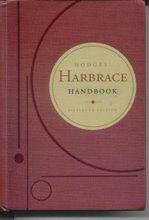
How can you learn for sure to spell tough words, like occurrence, or accommodate? Or parallel? One good start is to pay a visit to Harbrace Chapter 18: Spelling and Hyphenation. The first seven pages are invaluable for anyone.
Thursday, November 15, 2007

Wednesday, November 14, 2007
Digging in your heels -- recalcitrant
from www.wordsmith.org
recalcitrant (ri-KAL-si-truhnt) adjective
Stubbornly resistant to authority.
[From Latin recalcitrare (to kick back, to be disobedient), from re- (again) + calcitrare (to kick), from calx (heel). If you have a dog that has dug his heels in while you're trying to pull him forward, you have a case of an animal that's being recalcitrant, literally.]
Click here to see recalcitrant in the Visual Thesaurus.
"Mount Kelut has been on high alert for more than two weeks but activity escalated dramatically on Friday, triggering fresh rounds of evacuations carried out by troops and local officials. On Saturday, some recalcitrant residents were dragged from their homes."
-- Indonesia's Mount Kelut Erupts; Agence France-Presse; Nov 3, 2007.
Tuesday, November 13, 2007
Omit superfluous words, SEC style
(from "A Plain English Handbook," put out by the Security and Exchange Commission to coach financiers on making their stock offerings and other disclosure documents more comprehensible.)
Words are superfluous when they can be replaced with fewer words that means the same thing. Sometimes you can use a simpler word for these phrases:
superfluous . . . . . simpler
in order to . . . . . to
in the event that . . . . if
subsequent to . . . . after
prior to . . . before
despite the fact that . . . although
because of the fact that . . . because or since
in light of . . . because or since
owing to the fact that . . . because or since
before
The following summary is intended only to highlight certain information contained elsewhere in this Prospectus.
after
This summary highlights some information from this Prospectus.
Friday, November 9, 2007
A comma costs a cable company $1 million
As we know, non-restrictive phrases or clauses -- that is, those that can be dropped out of a sentence without changing its meaning -- are set off in commas.
So, the second comma in the following sentence makes the "and .. " adverbial phrase a non-restrictive element, which means that the contract can be terminated in a year:
“This Agreement shall be effective from the date it is made and shall continue in force for a period of five (5) years from the date it is made, and thereafter for successive five (5) year terms, unless and until terminated by one year prior notice in writing by either party.”
Here's the whole story from a year ago:
By Ian Austin of The New York Times
OTTAWA, Oct. 18 - What is the price of an extra comma? For Canada’s largest cable television company, it may be 1 million Canadian dollars.
Rogers Communications of Toronto and a telephone company in Atlantic Canada are locked in an arcane grammar debate that will decide the fate of a contract between the two corporations.
Canada’s telecommunications regulator, citing what it called the “rules of punctuation”, recently ruled that a single comma in a 14 page contract allows Bell Aliant to cancel a five year contract covering use of telephone poles by Rogers at any time with notice.
Rather than accept the regulator’s grammatical parsing, Rogers has now turned to Canada’s official language, French, as well as its own outside grammar expert to appeal the ruling. The case clearly frustrates Kenneth G. Engelhart, its vice president of regulatory affairs.
“Why they feel that a comma should somehow overrule the plain meaning of the words is beyond me,” Mr. Engelhart said. “I don’t think it makes any sense.”
The agreement between the two companies is a standard contract for the use of utility poles that was negotiated between a cable television trade association and an alliance of telephone companies. French and English versions of the contract were approved by the government regulator about six years ago.
Mr. Engelhart said that the cable industry’s has always understood that the pole contracts run for five years. In that industry’s view, the contracts then automatically renew for another five years unless a telephone company cancels the agreement before the start of its final 12 months.
Aliant, which is controlled by Montreal-based BCE, declined to comment on the dispute. However, in a filing with the Canadian Radio-television and Telecommunications Commission, it declared the issue “a classic case of where the placement of a comma has great importance.”
Mr. Engelhart said the grammar fight began when Aliant told Rogers in February 2005 it was canceling a pole agreement for the province of New Brunswick one year early. The cancellation was necessary because a local electrical utility was taking direct control of poles that Aliant previously managed on its behalf.
The power company, Mr. Engelhart said, planned to “really crank up rates,” a change that would cost Rogers about 1 million Canadian dollars over that final year.
In the first round, the regulator agreed with Aliant that the second comma in this sentence enables the phone company to escape the contract after as little as one year: “This Agreement shall be effective from the date it is made and shall continue in force for a period of five (5) years from the date it is made, and thereafter for successive five (5) year terms, unless and until terminated by one year prior notice in writing by either party.”
Even Aliant allowed in its submissions that there are at least three different ways to interpret the sentence.
But the regulator concluded the second comma means that the part of the sentence describing the one year notice for cancellation applies to both contract’s five year term as well as its renewal.
“The meaning of the clause was clear and unambiguous,” it wrote in a ruling issued in July.
Mr. Engelhart acknowledged that his lawyers may have underestimated the regulator’s interest in grammar.
“We were obviously too confident the first time around,” he said.
To bolster its appeal, Rogers commissioned a 69-page affidavit, mostly about commas, from Kenneth A. Adams, a lawyer from Garden City, N.Y. and the author of two books on contract language. It disputes the regulator’s analysis of what Mr. Adams calls “The Rule of The Last Antecedent.”
Rogers is also banking on the official French version of the pole agreements which has equal status under Canadian law. While differences between the languages means that it will not settle the comma question, Mr. Engelhart said its phrasing removes any ambiguity about the contract’s lifespan.
“It becomes very clear once you read the French version,” he said.
Thursday, November 8, 2007
Indisputably true, self-evident -- axiomatic
from www.wordsmith.org
axiomatic (ak-see-uh-MAT-ik) adjective
1. Indisputably true; self-evident.
2. Aphoristic.
[From Greek axiomatikos, from axioma (honorable). Ultimately from Indo-European root ag- (to drive, draw) that's also the fount of suchwords as act, agent, agitate, litigate, synagogue, and ambassador.]
axiomatic (ak-see-uh-MAT-ik) adjective
1. Indisputably true; self-evident.
2. Aphoristic.
[From Greek axiomatikos, from axioma (honorable). Ultimately from Indo-European root ag- (to drive, draw) that's also the fount of suchwords as act, agent, agitate, litigate, synagogue, and ambassador.]
Wednesday, November 7, 2007
The true story behind Thunder Road
 The Boys of Thunder Road
Our Best Lead Yet for the Real “Mountain Boy” in Thunder Road
By Brooks Clark
“Let me tell the story, I can tell it all, about the mountain boy who ran illegal alcohol….”
So croons Robert Mitchum in his 1958 hit record, The Ballad of Thunder Road, a bi-product of the cult-classic B movie, Thunder Road, that Mitchum wrote, produced and starred in, alongside his son.
Like so many Tennesseans born in the 50s, I can’t remember a time in my life when I didn’t know by heart (and sing in our station wagon on those family car trips) that infectious refrain—
“And there was thunder, thunder over thunder road,
Thunder was his engine and white lightning was his load.
And there was moonshine, moonshine quench the devil’s thirst,
The law they swore they’d get him but the devil got him first.”
From its twangy opening guitar run, the song builds to a tragic denouement. In an ominous e-minor key evoking danger and action (used to similar effect in Henry Mancini’s James Bond Theme and Johnny Rivers’ Secret Agent Man) – Mitchum sings,
On the 1st of April, 1954,
the federal man sent word
He’d better make his run no more.
He said 200 agents
were covering the state
Whichever road he tried to take,
they’d get him sure as fate.
Son, his daddy told him,
make this run your last.
The engine’s filled with hundred proof;
you’re all tuned up and gassed.
Now, don’t take any chances,
if you can’t get through.
I’d rather have you back again
than all that mountain dew.
Roarin’ out of Harlan, revvin’ up his mill,
He shot the gap at Cumberland,
and screamed by Maynardville.
With T-men on his tail lights,
roadblocks up ahead,
The mountain boy took roads
that even Angels feared to tread.
Blazin’ right through Knoxville,
out on Kingston Pike,
Then right outside of Bearden,
where they made the fatal strike.
He left the road at 90,
that’s all there is to say,
The devil got the moonshine
and the mountain boy that day.
In the movie, the mountain boy’s 1950 Ford Coupe busts through one Bureau of Alcohol, Tobacco & Firearms (ATF) roadblock, swerves to avoid a second, careens at full speed off the highway, rolls over three times and lands in a fiery mess on the fence of a electric-utility switching station.
Connoisseurs of Thunder Road know the movie was filmed in Asheville and the action takes place nowhere near Knoxville, and those who’ve looked have never found any record of the crash in Knoxville's newspapers or court records.
Nonetheless, the words of the song and the image from the movie of the hot rod flipping over into an electrical substation are cemented in our collective memory, and they certainly tap into larger truths about this region’s ties to moonshine, fast cars, and running from revenuers.
When I drive on Kingston Pike near Bearden Hill, those lyrics and images push their way into my head. I see the mountain boy roaring from Papermill Drive – the truck by-pass in those days – onto the main drag right where P.F. Chang’s is today. I see that Coupe roaring around a road block and flipping over into that substation, sparks flying and moonshine spilling.
It’s hard to imagine a song that entwines as many East Tennessee cultural strains as “The Ballad of Thunder Road”--- from moonshining, to our cussed aversion to being taxed or told what to do by the law or anyone else, to the gutsy drivers who became the first heroes of NASCAR, to the illogical collection of blind corners, five-way intersections and farm paths-dressed-up-as-parkways we call Knoxville’s road system.
Like the Iliad to the Greeks or King Arthur to the English, Thunder Road is in our DNA – the song, the movie, and a whole culture of legends that almost any Knoxvillian will swear to as fact.
At least one Knoxvillian – John Fitzgerald, a Farragut farmer – went to his grave swearing, absolutely believing, and persuading many others that he saw with his own eyes that car swerve off Kingston Pike and into a Lenoir City Utilities Board switching station.
So where did the story come from?
A few years ago, I gathered all the hints I could find about where Mitchum had gotten that story, and I put them in a Knoxville Cityview magazine article.
The 2001 Mitchum biography, Baby, I Don’t Care, by Lee Server, revealed that Mitchum found the story in the ATF files in Washington, D.C. He got access to the files with the help of the brother of his collaborator on the Thunder Road script, James Atlee Phillips. Mitchum spent days looking through the tales of the war against moonshiners in the Appalachians and came away with nine pages of official documents.
In a painful historical might-have-been, Server notes that Mitchum had noticed Elvis Presley’s respectable acting debut in Love Me Tender and wanted him to play Mitchum’s younger brother. They even had a face-to-face meeting, but the Colonel’s asking price was too high. The role went to Mitchum’s son, and Elvis lost one of the few chances he ever had for an interesting dramatic role.
It’s easy to see how Mitchum could have taken the language from official reports to craft the lyrics of his song. (The tune was that of a Norwegian pavanne that his mother, Ann Gunderson, used to sing to him as a child.)
Phone conversations with ATF agents could have explained how Mitchum, who never visited Knoxville, nailed all the details of the Harlan-to-Knoxville roads – even the pronunciation of “Bearden” – so accurately. But no one ever knew the real basis for either the movie or the crash Mitchum sings about.
The tradition of mountain moonshining has been enshrined in songs from “Good Ole Mountain Dew” and “White Lightnin’” to “Rocky Top.” It was often the only way poor farmers could generate any income, and exorbitant taxes would eat up any margin that existed from the actual selling price. And that was when it was legal.
To get their product to market, moonshiners had to outrun local Alcohol Beverage Control (ABC) and federal ATF agents, and they had the hot rods to do it. Sundays through Thursdays the gutsy drivers honed their courage and driving prowess en route to markets in the big cities, then on Friday and Saturday nights they became the heroes of local dirt tracks, which led to the sport of stock car racing.
Legendary drivers like Junior Johnson ran routes around Wilkes County, North Carolina. Knoxville had heroes like “Tootle” Estes, Ralph Burdette “Duck” Moore and “Windy” York. In the magazine story, dirt-track hero Clyde “Breezy” Waddell had been included on that list. Afterward Waddell wrote a letter making it clear that he had never run whiskey.
“Thunder Road was a code name for a particular route that everybody knew,” said Grant McGarity, for years the resident agent in charge of the ATF office in Knoxville. “Someone in a shady part of town would refer to running Thunder Road at 4 o’clock in the morning, and it was often the main thoroughfare.”
The Thunder Road canon included the theories work body of Oak Ridge physicist/writer Alex Gabbard. In his book Return to Thunder Road, Gabbard had celebrated the route described in the song from Harlan, Kentucky, through Maynardville on Highway 33, Broadway and then onto Kingston Pike.
Both Gabbard and writer Kate Clabough had interviewed John Fitzgerald, who swore, with many persuasive details, that as a teenager he saw federal agents at a roadblock and a crash on Kingston Pike.
Fitzgerald couldn’t pin down the year, let alone the exact date. He’d done the first half of his morning chores, and it was still too damp to do the rest, so he rode his bike down to Galyon’s Esso Service Station on what was then the corner of Vanosdale and Kingston Pike, across from what is now West Town Mall.
There he saw a group of ATF agents getting ready to set up two roadblocks—one where Will Walker’s farm was then (and Pet Supplies Plus and First People’s Bank are today), the second near Morrell Road.
“It’s the little stuff John remembered from the wreck that made me really feel like he knew what he was talking about,” says Clabough. “For example, he remembers thinking the agent wasted money, since he purchased a Grapette, even though an RC was twice the size for the same price. He also remembers that another agent must not have liked Galyon’s coffee, since he tossed the coffee from his cup onto the parking lot, and the owner gave him a funny look.”
As the agents pulled two cars bumper to bumper across Kingston Pike, Fitzgerald says he hid in a ditch near Morrell Road, near the second of two roadblocks. He says he could hear the engine roaring long before he came into sight.
The mountain boy would have driven by the Mount Vernon Motel (now World Futon) on a Kingston Pike that was then a two-lane road through farmland. It had dips, rises, curves and blind entrances from farm roads.
As quoted in Gabbard’s book, Fitzgerald says the car swerved off the road, jumped a gully, cut through a bank of dirt, and ended up lodged in the fence of a substation where Mattress Direct and Walker’s Formal Wear are today.
“It was a ’52 Ford, misty green, solid color,” Fitzgerald told Gabbard. “It had gone through the southeast corner of the fencing around the substation and ended up in the air, sort of, still in the fencing. Gas and whiskey spilled out of it, and some of the whiskey had been thrown over into the sub-station and caught fire….
“The trunk lid was knocked open and several cases of moonshine had broken. I remember the smell. … [the driver] was laying facing south, on his right side, in a fetal position, sort of crumpled up. He was all bloody. His hair was dark brown, cut in a typical 50s hair-style. He had on a light-colored shirt….I remember thinking, ‘what a waste.’ …. He gave his life for a trunk load of whiskey.”
Fitzgerald told Gabbard he recalls the Highway Patrol arriving and conducting an investigation, but Gabbard never found any records of the incident in Highway Patrol records or any other corroboration.
Clabough, meanwhile, vowed that someday, somehow, she would find the mountain boy, even as she was writing dozens of stories and keeping up with her blended family of five children.
A relentless historical researcher, Clabough had gotten her training in a Nebraska library that doubled as a newspaper morgue. That was before she moved to Louisville in 1997. Her husband, David is a dairy farm manager turned graphic designer and the one who first piqued Kate’s interest in Thunder Road.
Clabough checked newspaper microfilms, police reports and funeral home records. She interviewed many who called with leads after the magazine story (we listed a phone number), including Knoxvillians with memories of similar crashes of moonshiners or stories they’d heard about some of our area’s great dirt-track drivers, or their grandfathers, or friends of their grandfathers.
One elderly woman called and told about a crash off North Central, where the car turned over and poured whiskey all over the street.
Another caller said the movie was based on moonshine-runner Gus Mathis. Clabough called Mathis’s widow, Grace, at her Cocke County home. Grace said, yes, indeed, Gus ran his car over Swann’s Bridge headlong into a police car, ended up in a full body cast, and got 13 years in prison in Atlanta. But he was not the subject of the movie.
Gabbard had gathered many clues about the mountain boy might have been connected to places near Harlan. Clabough wrote letters to people all over that area. “Not one lead,” says Clabough, “not a glimmer of recognition.”
From the very beginning, agent McGarity had told Clabough “immediately, with no hesitation” that he had always heard the real subject of Mitchum’s movie was from Cocke County. This was logical, since Newport had for many years been the nation’s capital of
moonshining.
Following that lead, Clabough sent a letter to the editor of The Newport Plain Talk. It was a short note, saying she was looking for the identity of the person in the movie Thunder Road.
Within days, Clabough received an unsigned letter, written on two sides of lined notebook paper in a neat script, probably that of an elderly woman. It was postmarked Knoxville. It said that the facts “as told by my mother,” were that “the person in Thunder Road was from Mountain Rest in Upper Cosby, now in the National Park. Pinkney Gunter was a maker of moonshine. His son, Rufus, was the ‘runner’ and delivery man.”
“After Rufus’ death,” the letter continued, “the family was approached by Mitchum’s people about signing a release to make a movie based on their son’s exploits. At first, his father refused, but, eventually, his mother did sign the release.”
Days later, Clabough received a second letter, also postmarked Knoxville but in a different hand and signed. (The writer wishes her name withheld.) “It included a list of names and addresses I could call to verify,” says Clabough. The writer said Gunter went off a bridge into the lake, and she went “to watch when they were dragging the body.”
Then Clabough got a call from Cocke County Circuit Court Judge Ben Hooper. “Thunder Road was based on a man named Rufus Gunter,” Hooper told Clabough. “He didn’t die like Mitchum’s character, but he certainly lived like him. I remember my Uncle George Poe taking me to see him race in Knoxville. He talked him into giving me a ride. He drove a ’37 or ’38 Ford. I remember the car had no passenger seat so I sat down low on the floor. The car bounced all over. I was scared to death. I wouldn’t say it was a good experience.”
Hooper said that in January 1953, Gunter was being chased on the Asheville Highway, heading toward Knoxville, when he got to the J. Will Taylor Bridge.
It turns out that Eddie Harvey, now 86, the recently retired proprietor of Eddie’s Auto Parts on Broadway in North Knoxville, had souped up engines for Rufus Gunter and remembers well the night he died. As Harvey recounted to Fred Brown of the News Sentinel, "It was ice cold and Rufe was red hot from driving that car. He jumped for it. When he hit the water, he took a cramp and went under. It took me a week to find him."
Ronnie Moore, son of racing legend “Duck” Moore, told Clabough that his father knew Rufus Gunter well. They raced against each other in the 40s and early 50s, until Gunter’s death took him off the circuit. And they both ran moonshine.
In the context of Cocke County moonshining, it’s not surprising that it took almost 50 years for outsiders to connect the tale of Rufus Gunter to Mitchum’s movie. Though it’s “colorful regional flavor” to historical researchers, it was dangerous organized crime to those who lived it. Even today there are secrets in Cocke County that prudent souls might not want to ask too many questions about.
For Clabough, the search for Thunder Road led her back in time. Following a lead, Clabough visited the home of an elderly Jean Schilling near Newport. During the Depression, Schilling’s father, Ike Costner, had been the biggest moonshine distributor in East Tennessee. Known in the newspapers as the “Newport Bad Boy” Ike Costner was an inveterate criminal and mobster.
He did time in Leavenworth and, with Al Capone, was on the first trainload of convicts sent to newly opened Alcatraz in the 1930s. Ironically, Costner had learned to make whiskey at a government-run distillery in Cocke County before Prohibition.
Mrs. Schilling gave Clabough a boxful of materials, including several volumes of poems by her aunt, Ella Costner, the Poet Laureate of the Smokies, who also happened to be Ike’s sister.
The volumes included Ella’s memoir, Song of Life in the Smokies, a frank and chilling portrait of desperate poverty, Godliness and violence, good souls and bad, in early 20th Century Cocke County. Ella’s father was a preacher and a good man, but her brother went bad. She became a Navy nurse, saw the world, came back home, and wrote about it.
Ella Costner knew the Gunters. Her book includes the names and genealogy of the families in the Cosby area, including “Pink” Gunter, his wife Susie – called “Ollie,” maiden name Ramsey – and their son Rufus. Born about 1920, Rufus was 33 when he died. Not exactly a boy, but still the beloved son of Pink and Ollie Gunter.
In her search for Rufus Gunter, Clabough has grown to understand the process by which memories mix with family stories, legends, and movies, take on a life of their own, and grow stronger with the years. Cognitive researchers tell us this is the way our brains work: our memories change each time we re-visit them.
The late John Fitzgerald remembered all those details from Kingston Pike in the early 50s, seeing federal agents drink a Grapette, hearing the roar of an engine, smelling the whiskey.
Says Clabough, “In the clippings, I never found a moonshiner’s wreck from those years, but I did find a story about federal agents testing a new fangled technology—radar. John may have seen them testing radar that day, and everything he described may have been exactly as he saw it.”
The images from the movie and song could have filled in the blanks of what he didn’t see. The words of Mitchum’s song are so vivid – and tied to the roads we drive every day – that in our minds many of us have seen that Ford Coupe leave the Kingston Pike at ninety and flip into that switching station a hundred times.
Ultimately, it’s the truth at the heart of Mitchum’s movie that makes it a cult classic for East Tennesseans, who might have heard the stories of grandparents driving dirt tracks and surviving the hard times by turning their corn into moonshine. And there is the pain at the heart of the story -- the daddy who lost his son for a trunkful of Mountain Dew.
The devil got the moonshine and Rufus Gunter that day, but Knoxville got a legend that will live as part of our cultural landscape forever.
Affect and effect -- the peskiest homonyms
 From the AP wire (a language fossil, I know) a couple of years ago: "The way Notre Dame went about replacing Tyrone Willingham had a greater affect [sic.] on its minority hiring report card than its decision to fire the school's first black football coach."
The old affect-effect thing can trip anyone up at any time.
Homonyms are words similar or identical in sound but different in spelling and meaning.
Affect and effect are the two most frequently confused homonyms. Each can be used in several different senses, but if you learn only the meanings below, you will obviate (to prevent by anticipatory action) 95 percent of the trouble most people have with these two words.
affect v.
To cause a change to take place in, to influence (to produce an effect upon):
-Smoking affects the health. The mayor's reform will affect the life of every citizen.
-To touch or move emotionally: The play so affected me that I cried.
-To pretend, to imitate: I affect an aire of supercilious disdain. ("Affected" in "He is an affected ass" is the past participle of the verb affect as used in sense 3.)
Note: The word "affect" is never a noun, except in one sense, used by psychologists, who refer to "affective states" and "affect" - with regard to a person's face and the feeling or range of feelings expressed therein. As in: "The patient had an unusual affect that probably traced back to an unhappy childhood."
The word "effect" is a noun or a verb.
effect v.
To bring into being, to bring about, to cause to happen, to accomplish: I effected an honorable solution to a tough problem.
effect n.
A result or consequence (anything produced by an agent or cause): What effect will the mayor's reforms have upon the citizens?
The effect of the win was improved morale
Subscribe to:
Posts (Atom)