from www.wordsmith.org
ragamuffin (RAG-uh-muf-in) noun
Someone, especially a child, in ragged, dirty clothes.
[After Ragamoffyn, a demon in William Langland's 14th century poem
Piers Plowman.]
"There were ragamuffins filled with certainties on every streetcorner
and philosophers in every coffeehouse."
-- Earl Shorris; A Nation of Salesmen; Harper's (New York); Oct 1994.
Monday, November 26, 2007

Saturday, November 24, 2007
The Notre Dame Victory March
When once-mighty Notre Dame plays Stanford today, the Fighting Irish will be trying to avoid their 10th loss of the season, so it's a good time to sing "The Notre Dame Victory March" loud and clear.
First played in 1909, the "Victory March" was written by the Rev. Michael J. Shea and his brother John, classes of '06 and '08, respectively. Michael became a priest in Ossining, N.Y. John lived in Holyoke, Mass. The song's public debut came in the winter of 1908 when Michael played it on the organ of the Second Congregational Church in Holyoke.
The first verse, nobody knows:
Rally sons of Notre Dame
Sing her glory and sound her fame,
Raise the Gold and Blue
And cheer with voices true:
Rah, rah, for Notre Dame.
We will fight in ev-ry game,
Strong of heart and true to her name
We will never forget her
And will cheer her ever
Loyal to Notre Dame
But the second verse, everybody should know:
Cheer, cheer for old Notre Dame,
Wake up the echoes cheering her name,
Send a volley cheer on high,
Shake down the thunder from the sky.
What though the odds be great or small
Old Notre Dame will win over all,
While her loyal sons are marching
onward to victory.
Friday, November 23, 2007
Vary sentence structure and length
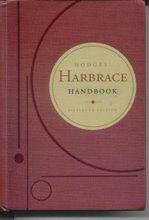
Harbrace Chapter 30 is on Variety: Vary the structure and length of your sentences to maintain the reader's interest.
Seek sentence variety to make your writing livelier. Inexperienced writers tend to rely too heavily--regardless of content or purpose---on a few familiar, comfortable structures.
Among many items for a writer's bag of tricks in Chapter 30, there's Rule 30b(2): Begin with a prepositional phrase or a verbal phrase.
His fur bristling, the cat went on the attack. [absolute phrase] Light, water, temperature, minerals---these affect the health of plants. [introductory series]
Seek sentence variety to make your writing livelier. Inexperienced writers tend to rely too heavily--regardless of content or purpose---on a few familiar, comfortable structures.
Among many items for a writer's bag of tricks in Chapter 30, there's Rule 30b(2): Begin with a prepositional phrase or a verbal phrase.
- Out of necessity, they stitched all of their secret fears and lingering childhood nightmares into their existence. --Gloria Naylor [prepositional phrase]
- To be really successful, you will have to be trilingual: fluent in English, Spanish, and computer. --John Naisbitt [infinitive phrase]
- Looking out the window high over the state of Kansas, we see a pattern of a single farmhouse surrounded by fields, followed by another single homestead surrounded by fields. --William Ouchi [participial phrase]
Another very handy tip, No. 30b(4), suggests: Begin with an appositive, an absolute phrase, or an introductory series.
Wednesday, November 21, 2007
A demimonde -- oo la la!
demimonde n. [from the French demi (half, or "partly a part of") + monde (world)]
1 a: a class of women on the fringes of respectable society supported by wealthy lovers b: prostitutes
2: a woman of the demimonde
3: a group engaged in activity of doubtful legality or propriety
"Before Giuliani gets [to the presidency], Americans might want to learn more about the New York demimonde he runs with. In recent years, New York's hothouse of sex and power has sometimes felt like a nuthouse, with the inmates in charge."
---From Jonathan Alter's column in the current Newsweek
The People She Loved
A retired prostitute remembers a downtown Knoxville demimonde
by Jack Neely
--- a coverline from Metro Pulse (Knoxville's Weekly Voice)
Tuesday, November 20, 2007
From 1597 -- We Gather Together

From Wikipedia:
We Gather Together is a Christian hymn of Netherlands origin written in 1597 by Adrianus Valerius (pka François Valéry) as Wilt Heden Nu Treden to celebrate the Dutch victory over Spanish forces in the Battle of Turnhout.
In the United States, it is popularly associated with Thanksgiving Day and is often sung at family meals and at religious services on that day. Although it appeared in a Dutch hymnal printed in 1626 (after the Pilgrims sailed to Massachusetts), the Pilgrims probably knew the hymn or about it from the period when they lived in Holland.
The hymn is customarily performed to a tune known as "Kremser", from Eduard Kremser's 1877 score arrangement.
The modern English text was written by Theodore Baker in 1894.
We gather together to ask the Lord's blessing;
He chastens and hastens His will to make known;
The wicked oppressing now cease from distressing,
Sing praises to His name: He forgets not his own.
Beside us to guide us, our God with us joining,
Ordaining, maintaining His kingdom divine
So from the beginning the fight we were winning;
Thou, Lord, wast at our side, All glory be thine!
We all do extol thee, thou leader triumphant,
And pray that thou still our defender wilt be.
Let thy congregation escape tribulation;
Thy name be ever praised! O Lord, make us free!
Monday, November 19, 2007
Like St. Patrick -- a noble patrician
from www.wordsmith.org
patrician (puh-TRISH-uhn) noun
A person of high social rank, good background, etc.; an aristocrat.
[From Latin patricius (having a noble father), from pater (father).]
A note from a www.wordsmith.org subscriber:
"Of course, as an Irishman I have to point out that this is the origin of our patron saint's name. He was indeed a Roman patrician by birth, as he and his father were Roman citizens and their family owned a villa in Britain called Bannaventum Tabernae, staffed with both servants and
slaves. A real patrician indeed."
"The exciting new tie width even spawned a musical genre (probably invented by some dull, pipe-smoking patrician at Rolling Stone magazine)."
-- Simon Mills; The Day Ties Went Size Zero; The Guardian (London, UK); Oct 26, 2007.
Friday, November 16, 2007
Bo, Woody & Ralph Waldo


"Go forth into the busy world and love it. Interest yourself in its life, mingle kindly with its joys and sorrows."--Ralph Waldo Emerson (right).
The coming weekend's showdown between Ohio State and Michigan brings up memories of the late, longtime Wolverine coach Bo Schembechler and his mentor and coaching rival, Woody Hayes (above), whose long career as coach of the Buckeyes was ended by an intemperate moment in the 1978 Gator Bowl, when he gave a dandy upper cut to Clemson linebacker Charlie Bauman, who had intercepted an Art Schlichter pass to seal the game.
In the early 80s, I had a phone interview with a retired Hayes on the subject of pep talks, for which he was famous. He often liked to talk with his players about history. ("I've got two dollars," he said to an Ohio high school audience in the 70s. "Whoever tells me the two most important events of the 20th century, I'll give you a dollar and sign it!." Woody's answers: the Russian Revolution and the explosion of the atomic bomb.)
When Ohio State played at Illinois, Hayes said he liked to look at the portrait of Abe Lincoln in the dining hall and talk about Lincoln -- what kind of a man he was, what kind of an athlete he was (a rail splitter, state champion wrestler) and what kind of a football player he would have been (a defensive tackle, the team decided, "because he could use those rail-splitter's arms to shed blockers") .
Hayes then said he often liked to talk with his players about Emerson's essay on "Compensation." It's a 40-page essay, with many complex themes relating morality to the natural world. But one theme is, roughly, that you receive many kindnesses and benefits in your life (like, say, from teachers and parents) that you can't really pay back to those people. But you can (and should) extend similar kindnesses to others to balance out the give and take of the cosmos (or something like that).
Hayes said many a player had come back to him in later years and said, "Coach, Emerson was right!"
Suffice it to say that the world of college football has changed a little since the days of Woody Hayes -- though Joe Paterno could probably throw a little New England trancendental philosophy around the locker room if he really wanted to get the Nittany Lions up for a tough game!
Art Schlichter, by the way, went on the become one of the most tragic victims of compulsive gambling ever. He threw away his NFL career and his life because of the addiction, for which he was treated in the best gambling addiction facilities in the country, to no avail. Schlichter most recently served a sentence in federal prison for money laundering and fraud. He was released from prison on June 16, 2006. By one estimate, he owes half a million dollars in restitution.
Art Schlichter, by the way, went on the become one of the most tragic victims of compulsive gambling ever. He threw away his NFL career and his life because of the addiction, for which he was treated in the best gambling addiction facilities in the country, to no avail. Schlichter most recently served a sentence in federal prison for money laundering and fraud. He was released from prison on June 16, 2006. By one estimate, he owes half a million dollars in restitution.
Schlichter has founded a non-profit organization, Gambling Prevention Awareness, to educate others about the perils of compulsive gambling, including college and NFL players. He told ESPN that he started gambling because the pressure of being Ohio State's starting quarterback was too much on him, and he wanted to be just a regular guy.
Subscribe to:
Posts (Atom)