Sunday, September 16, 2012

GTOTD helps a friend discover his Scots-Irish roots: it's what we do.

With this post (also excerpted below) from his blog "Lee Family History," Grammar Tip of the Day's lifelong friend Paul Lee just made this one of the all-time great moments in GTOTD history. 

How "The Grammar Tip of the Day" inspired me to find my Scots-Irish roots

When I went back to Knoxville, Tennessee, recently on a visit with my Aunt Florence as a part of a quest to learn more about my family roots, I had dinner with my lifelong friend Brooks Clark. When I told him I had traced my ancestry to Ulster, he shared with me the 2004 non-fiction book by Senator James Webb (D-Va.), “Born Fighting: How the Scots-Irish Shaped America,” which is especially thought provoking in its insights into the influence of Scots-Irish culture that carry forward to the present. Brooks summarized from the book that common character traits of the Scots-Irish are a loyalty to kin, mistrust of governmental authority, fierce independence and military readiness. Another trait is the tendency of Scots-Irish culture to absorb members of other groups. Many of these defining traits are exemplified in my Wray ancestors as we shall see by exploring their common but fascinating lives.
    Brooks had written about this book in his blog titled “The Grammar Tip of the Day”:
“The word redneck was first cited in 1638, when Scots -- riding the wave of the Protestant Reformation -- adopted the Presbyterian Church (in which each church is run by its own Presbyters, or elders) and rejected the Church of England and its episcopacy (rule by bishops). Scots signed a National Covenant, often using their own blood. Many wore red pieces of cloth around their neck to signify their position to the public. Hence, they were referred to as Rednecks …. the idea of choosing to govern one's own religion of course led directly to the idea of choosing one's own government. This latter idea was carried over from Scotland, planted in America and brought to flower in the American Revolution.”
 
Read more.

Link to another GTOTD post, pertaining to the Metro Pulse story "Why East Tennesseans Love Their Guns.

Link to the original post cited above by Paul Lee.

A post about another great GTOTD moment with Paul Lee, the April 1968 filming of an RFK campaign ad in our school library. 


Thursday, March 15, 2012

A look back at the life of Dr. John C. Hodges on his 120th birthday


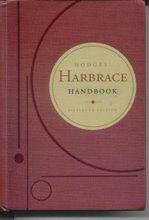
Today, March 15, is the 120th anniversary of the birth of the great grammarian and author of the Harbrace College Handbook, Dr. John C. Hodges of the University of Tennessee. 
    The Grammar Tip of the Day staff marked this occasion by composing a look back on Hodges' life, which you can read by clicking here.
    Today's profile includes little about Harbrace, since that was covered in "How the 'Harbrace Handbook of English' Changed the Way Americans Learn About Writing" last year, the 70th anniversary of that great tome, the top-selling college textbook of all time.

Saturday, February 25, 2012

Like and as -- should we just give up?

"Trae Golden scored eight points to keep Tennessee in the game late in the first half of Saturday's loss at Alabama, but the Volunteers' sophomore point guard turned the ball over six times and admitted after the game he didn't control the game like he should."

The sentence above was written by a former sports writing student of mine.  He was an excellent, attentive student, is a great guy and is doing very well in a very competitive field.
      We see this use of the word "like" in newspapers everywhere, including The New York Times.   I assume the Times' style sheet -- like that of our local Knoxville News Sentinel and our local grammar guru, Don Ferguson -- says that this is common usage and therefore fine.
     The only thing is, every time I read it, it makes me stop and say, "This just doesn't look or sound right to me."  I notice that two writers roughly my age (55) at our local paper write "the way" or " as" or "that" in the various places we use "like" in conversation and casual writing.
     My question is this: might there ever come a time when this holds a young writer/reporter back?  Might some crusty Baby Boomer editor looking through clips come upon this lead and move on to the next person? 
     I don't know the answer to this, or to the larger question of whether I am the last mastodon; i.e.,  whether anyone else on earth notices the like or as moments or cares about them.
    
(For previous posts on this topic on this blog, including the Harbrace rule, search "Like and as.")

Wednesday, November 16, 2011

The Return of the Subjunctive -- a poem

This poem was featured recently on Garrison Keillor's Writers' Almanac:

The Return of the Subjunctive


Oh, the Subjunctive,
May it make its bold return!
May it ride back proud
In liveried coach,
May its two fine horses snort
And paw the ground,
And, escorted by its staunch
Attendants If and Whether,
May it descend in velvet cloak
And black-gloved hand
The lacquered steps of hope
And happenstance.
May it fix upon us its deep
Uncertain gaze!
I shall be there to greet it
Though my company
Be small and moody.
I shall beg it stay
And may its presence give
Some respite from the steely glare
Of Indicative, a mantle to shield us
From Passive's clammy chill.
May it light again the land
Between the world that was
And is, and that which still might be,
And may we tread again desire's
Leaf-dappled path
Of possibility.
"The Return of the Subjunctive" by Tamara Madison, from Wild Domestic. © Pearl Editions, 2011. (buy now)

Tuesday, October 4, 2011

It's time to tax big-time moneymaking athlete-exploiting college sports

In a well-wrought story in Chicago Life magazine, Allen R. Sanderson makes an excellent case for imposing a sin tax on the revenues that intercollegiate football and basketball generate for everyone but the players.

"This money," writes Sanderson, "could be set aside to provide funding for the ex-players to return to earn a degree, enter a graduate program, and/or start a small business."

Sanderson puts forth a novel idea for addressing the exploitive system by which everyone in big-time college sports makes big money except the athletes.

The peculiar system presided over by the NCAA was laid out very well by Jesse Fox Mayshark in Exploiting U.: The Issue of Paying College Players Grows Along With Coaches' Rising Salaries, a story later cited as the best sports story in East Tennessee in 2010.

While players are obliged to invest the time appropriate to a full-time job, they are forbidden by NCAA rules even to hold part-time jobs, as other college students do.

Wednesday, September 28, 2011

Use adverbs instead of incorrect adjectives, even if it makes you sound like a smarty pants!

We are accustomed to athletes use manly sounding adjectives where more prissy-sounding adverbs should be. "I take this serious! Real serious!" whined Arizona Cardinals quarterback Derek Anderson after a wag questioned his commitment. "I put my heart and soul into this every single week!"

In certain parts of the nation, a person using an adverb in a quote like the one above might be seen as a snob or, worse, of harboring any number of seditious beliefs --from evolution and global warming to banning guns in bars.

This is probably why the development coordinator of Ijams Nature Center, an educational enterprise, was quoted in a recent Knoxville News Sentinel story as saying, "Absorbing that [budget] cut meant we were going to have to do things different. We did not elect to lay off staff, so we reshuffled the deck, changed things around."

Our language is slowly losing the distinction between adjectives and adverbs, but for now we should follow the rule:

Harbrace Rule 4a: Use adverbs to modify verbs, adjectives, and other adverbs

NOT Leela played her part perfect.
USE Leela played her part perfectly. [The adverb perfectly modifies the verb played.]

NOT The plane departs at a reasonable early hour.
USE The plane departs at a reasonably early hour. [The adverb reasonably modifies the verb early.]

Most dictionaries still label the following as informal usage: sure for surely, real for really, and good for the adverb well.

INFORMAL The Broncos played real good during the first quarter.
FORMAL The Broncos played very well during the first quarter.