Sunday's New York Times Magazine included the following sentence:
"[Bill] Hybels, founder of the Willow Creek Community Church near Chicago, is very possibly the single-most-influential pastor in America . . ."
Are those hyphens necessary or correct per the hyphenated-adjective rule?
They are probably not necessary, since there would be no confusion if they were left out.
But do those three words truly comprise a single adjective? Rather, they are three adjectives modifying one another on their way to the noun.
We saw an example of this in a News Sentinel story about the faithful renovation of a 19th-century home: "John Roske lays brick using a special but expensive mortar most like the mortar found in the 1840s." No hyphens needed.
In the paragraph above, do we really need that hyphen between 19th and century?
In this case we would note the exception to the hyphenated-adjective rule, in which the hyphen is superfluous if the two or more words used before the noun as a single adjective are commonly used together, as in "major league baseball."
Wednesday, October 31, 2007

Tuesday, October 30, 2007
The river hardened into rock? Back to Rule No. 1 -- Every sentence gotta make sense!

 A year ago we looked at the following sentence from the National Geographic with a portrait of the 3.3-million-year-old Australopithecus afarensis baby girl on its cover:
"He doesn't know how the Dikika baby died, but the river must have rapidly buried the body in pebbles and sand, protecting it from scavengers and weather before gradually hardening into rock."
Yes, yes -- we know what the sentence meant to say. But it didn't say it!
We could put another "it" between "hardening" and "into," but that would make the sentence say that the river hardened the body of the Australopithecus afarensis into rock.
It would be better to say, "before it gradually hardened into rock."
But even with that fix, we're saying that the body hardened into rock.. It was just her bones and skull that were fossilized into rock. So why not say, ". . . before her bones were gradually fossilized into rock."?
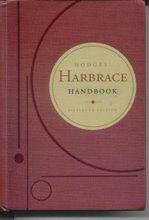
Harbrace Chapter 1: Sentence Sense, begins with the rule: To think more clearly and write more effectively, understand how sentences work.
Writing a clear, precise sentence is an art, says Harbrace, and you can master that art by developing your awareness of what makes sentences work.
In Ruge Rules, Ferdinand E. Ruge states this as, "Every sentence must lend itself to logical analysis. In other words, every sentence gotta make sense!"
Finally, don't you think the A. afarensis baby looks like aerobics guru Richard (Sweatin' to the Oldies) Simmons?
Monday, October 29, 2007
Pasha -- of rank most high
pasha (PA-shuh, PASH-uh, puh-SHAH) noun
A person of high rank or importance.
[From Turkish pasa, from Persian padshah, from pati (master) + shah (king). Pasha was used as a title of high-ranking officials in the Ottoman Empire.]
Click here to see "pasha" in the Visual Thesaurus.
"The rise and rise of Ajay Bijli as the pasha of Indian multiplexes is born out of his passion for motion pictures."
-- Moinak Mitra & Shubham Mukherjee; Sundowner with Ajay Bijli; The Economic Times (New Delhi, India); Oct 6, 2007.
Friday, October 26, 2007
Only second? C'mon! It's second only!

Headline and subhed in today's Knoxville News Sentinel:
Regal CEO says it's only second to cinema at Turkey Creek
What is it about the placement of "only" that trips up so many decent, hard-working Americans?
As fully discussed in our Oct. 4 GTOTD, the placement of "only" can completely change the meaning of a sentence.
The subhed above says that our lovely new Riviera 8 downtown cineplex is only second to the Pinnacle Stadium 18 at Turkey Creek -- that is, with a little effort it could be something loftier.
What the headline means to say is that the Riviera is second only to the Pinnacle Stadium -- that is, the Riviera has defied the odds and beaten out two mall-based cineplexes and the "artsy" Downtown West 8.
Thursday, October 25, 2007
Heard lately -- Bronx cheer and raspberry
(from www.wordsmith.org)
Bronx cheer (brongks cheer) noun
1. A rude sound indicating disapproval, made by sticking the tongue partly out between the lips and blowing air out in a simulation of flatulence.
2. Any expression of derision or contempt.
[Probably after the Bronx, a borough of New York City, the home of Yankee Stadium, where Yankees fans often expressed their opinion of the umpire's decision or an unfavorable play that way.]
"It wasn't a unanimous Bronx cheer. Many fans stood and applauded for Martinez. Years of excellence outweigh one bad game. Still, it was an out-of-body experience to hear any boos for Pedro on Opening Night at Fenway Park."
-- Dan Shaughnessy; Voices of Fans Are Heard; Boston Globe; Apr 13, 2003.
Bronx cheer has a rather unusual synonym:
raspberry (also razzberry, often shortened to razz).
How in the world could a sound like that come to be known as a raspberry?
To learn this we take a peek at the fascinating working of rhyming slang. "Raspberry tart" was used as a code for "fart" and then the rhyming part was dropped. Other examples of rhyming slang are "butchers" for "look," as in "Take a butchers at this!" (from butcher's hook); "apples" for "stairs" (from apples and pears); china for mate (from china plate). Best-known rhyming slang was used by generations of London Cockneys, but similar rhyming slang is found in many other parts of the world.
Some believe the reference to raspberry is from the appearance of the tongue while "cheering".
Wednesday, October 24, 2007
Her has won .. Me went .. Tarzan go get Jane.
A quote in the Knoxville News Sentinel, from a Karns High student's letter (absolving a teacher for allegedly offending her): "Him and I have always joked around."
In a story in the sports section, a student was quoted as saying, "Me and Zach try our best not to talk about football..."
Someday the English language may make no distinction between the subjective and objective case in personal pronouns. But for now we're stuck with trying to keep things straight.
Once, at halftime of a Lady Vols' victory over Georgia, the poised and articulate Lisa Leslie began a sentence about two great coaches in women's basketball with, "Her and Pat Summitt have won more games than anyone."
Many of our kids say, "Me and Janie went to the Mall." Would anyone (other than Johnny Weissmuller) ever say, "Me went to the Mall"?
Another frequently heard Grammar Accident is, "...between you and I." No one would say, "...between I and you," because it sounds wrong. In all the case cases above, the speaker has to switch the order to reveal the error.
A Jeff Foxworthy Moment
Harbrace Section 5: Case charts the cases of pronouns, then adds, "Pronouns my, our, your, him her, it, and them combine with -self or -selves become intensive/reflexive pronouns. [Basically, these are objective pronouns that have gotten somewhat big for their britches and are used for emphasis to refer to a noun or pronoun in the same sentence.] Formal English does not accept myself as a substitute for I or me." [I myself don't care.]
Then there's a "Note: Hisself and theirselves, although the logical forms for the reflexive pronouns [durn tootin'!], are not accepted in formal English [dang it!]; use himself and themselves.
Bill lives by himself [NOT hisself].
They live by themselves [NOT theirselves]." [We might add: and certainly not "theyselves."]
Tuesday, October 23, 2007
Vizier -- How does it work? Just ask a Turk.
 from www.wordsmith.org
vizier (vi-ZEER, VIZ-yuhr) noun
A high official.
[From Turkish vezir, from Arabic wazir (minister).]
A high official.
[From Turkish vezir, from Arabic wazir (minister).]
"In fact, poor Jeff Immelt [right, flanked by Delaware Sen. Tom Carper and Lt. Gov. John Carney], the grand vizier of all General Electric, gets only $15 million, plus perks."
-- Mark Drought; Love of Money is the Root of All Evil; East Texas Review; Oct 9, 2007
-- Mark Drought; Love of Money is the Root of All Evil; East Texas Review; Oct 9, 2007
Subscribe to:
Posts (Atom)