Tuesday, April 27, 2010

Setting off in commas states (after cities) and years (after dates)


Not sure why, but many college students have trouble setting off states (after cities) and years (after dates) in commas , as in -- Boston, Massachusetts, is the cradle of liberty. And, Tracy applied for the job on April 13, 1993, and accepted it on Monday, May 24, 1993.

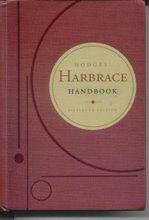
This falls in a note under the sacred of Harbrace section 12d, which states:

Commas set off nonrestrictive and other parenthetical elements as well as constrasted elements, items in dates, and so on.

Nonrestrictive clauses or phrases give nonessential information about a noun or pronoun. They can be omitted without changing the meaning. Restrictive clauses or phrases are essential to the clear identification of the word or words they refer to. They limit (rather than describe) those words by making them refer to a specific thing or person or to a particular group.

Subnote:
Geographical Names, Items in Dates and Addresses
This subnote contains the examples above. Note that commas are omitted when the day of the month is not given or when the day of the month precedes rather than follows the month (European style), as in -- Tracy applied for the job in April 1993 and accepted in on Monday, 24 May 1993.

Wednesday, April 14, 2010

Pulitzer Prize-winner Kathleen Parker thanks her 11th-grade English teacher


A sprig of verbena and the gifts of a great teacher
By Kathleen Parker
In 11th grade, my life changed in a flicker of light


Mr. James Gasque enters the Grammar Tip of the Day pantheon.
Bring back diagramming sentences!

Monday, April 5, 2010

From Ann Wylie's Writing Tips

Ann Wylie is a great writing teacher, and her Wylie's Writing Tips e-newsletters are filled with useful, practical ideas. (Click here to subscribe.)

Here are three tips from her April issue:

After a couple of months of reading on a reader, I decided to review my clippings. What I found will help me — and, I hope, you — model the masters, or steal techniques from some of the year's best writers to make your own writing more creative and compelling.

1. Use metaphor, not modifiers.
One problem with modifiers — thin, lean, straight — is that they don't paint pictures in your readers' heads. Instead of simply describing your subject with adjectives and adverbs, engage your readers' senses with analogy.
Meg Gardiner used this technique to describe a charismatic religious leader in her Edgar Award-winning mystery, China Lake:
"Peter Wyoming didn’t shake hands with people; he hit them with his presence like a rock fired from a sling-shot. He was a human nail, lean and straight with brush-cut hair, and when I first saw him he was carrying a picket sign and enough rage to scorch the ground."
Find yourself writing an adjective or adverb? Could you develop an analogy instead?

2. Coin a word.
Rebecca Goldstein is quite the neologist. In 36 Arguments for the Existence of God, she creates half-and-half words in this passage:
"Auerbach harbors such impatience for the glib literati—the 'gliberati,' as one of his own digerati had christened them—that Cass has wondered whether there might not be some personal history."
Can't find just the right word? Why not make one up?

3. Twist a phrase.
To call attention to an idea, change a word or two in a colloquialism to give it new meaning.
After seeing David Mamet's Boston Marriage hilariously performed by the Kansas City Actors Theatre, I read the play to make sure I didn't miss any lines like this phrase twister:
"ANNA: Have you taken a vow of arrogance?"
Want to call readers' attention to your point? Surprise and delight your readers with twist of phrase.

Wednesday, March 10, 2010

Seven tips to improve your writing

From Writing that Works

SEVEN TIPS TO IMPROVE YOUR WRITING

Writers must keep pushing to improve and to stay interested. Here are some ways to do both.

1. Read about writing. Look at many new books and buy the 10 to 12 a year that seem to offer at least two or three ideas or to reinforce the basics.

2. Attend writing seminars. At least once every other year attend a writing seminar to get reinforcement and hear others' points of view.

3. Soak in good writing. Read such publications as The Wall Street Journal, The New Yorker, Sports Illustrated and Vanity Fair. Read what you like and admire. Read as a writer; when you read something really good, go back and analyze it. Look for techniques you can use.

4. Notice how broadcast interviewers work. For example, Bill Moyers does extensive homework and shows intense interest in his subjects. Watch for questions and techniques you can use.

5. Don't try to perfect everything at once. Work on different elements on different pieces. For instance, on your next piece focus on writing great verbs.

6. Edit a paragraph or two of someone else's writing each day. Select a paragraph, perhaps from a newspaper, and improve it.

7. Talk shop. Keep your batteries charged by talking to other writers, whether in monthly departmental meetings or in groups writing completely different material.

SOURCE: WRITING THAT WORKS, a print-only, bimonthly newsletter.
Nonsubscribers may sign up here for a free trial subscription.

Friday, March 5, 2010

Scotty Hopson of the UT Vols profiled in Metro Pulse

Despite the Behind-the-Scenes Drama, the UT Men's Hoops Team Rallies Together

Heading into March Madness after a soap-opera season, the Vols’ men’s team finds an unlikely hoops hero: Scotty Hopson

By Brooks Clark
Metro Pulse

Wednesday, March 3, 2010

For a profile of UT basketball player Scotty Hopson, click here

Article summary: "The University of Tennessee’s athletic program has certainly seen its share of controversy in the past several months, with various arrests and sudden estrangements. And with the dismissal of star player Tyler Smith, it looked to be a grim season for the men’s basketball team after several rebuilding years under coach Bruce Pearl. But what do you know—in classic underdog fashion, the team pulled together a strong season. And one of its new leaders became Scotty Hopson. As the team heads into March Madness, Brooks Clark introduces us to its unlikely hero."

As the clock ticked down to zero against Florida, University of Tennessee guard Scotty Hopson picked up his dribble and launched the basketball high into the Thompson-Boling Arena rafters.
More.

Thursday, January 21, 2010

Sad day for spelling -- "Mohammed Ali" in The New Yorker

In Ken Auletta's story about the Obama Administraton and the media in this week's New Yorker, Auletta quotes from Dan Balz and Haynes Johnson's book The Battle for America 2008: "At the risk of triggering the very reaction that concerns me, I don't know if you are Mohammed Ali or Floyd Patterson when it comes to taking a punch. You care far too much what is written and said about you."

Since the name of arguably the greatest athlete of the 20th century is spelled "Muhammad Ali, " The New Yorker should have put a [sic.] in there. This is especially strange since the editor of The New Yorker, David Remnick, is the author of the fabulous book King of the World: Muhammad Ali and the Rise of an American Hero. (Although, to be fair, the name in the title is misspelled in several places on the Amazon listing.)

Tomorrow: an anecdote from the 1970s about English director Jon Amiel, whose movie Creation is reviewed in this week's New Yorker.

Monday, November 23, 2009

Use the comparative degree with 2, superlative with 3 or more

From yesterday's Parade magazine: "[Hugh] Grant grew up in London, the youngest of two brothers."

Harbrace 4c (1) Use the comparative to denote a greater degree or to refer to two in a comparison.

The metropolitan area is much bigger than it was five years ago.
She's the older of his two children.

(2) Use the superlative to denote the greatest degree or to refer to three or more in a comparison.

The interests of the family are best served by open communication.
Bert is the fastest of the three runners.