Today Bryan Garner's Usage Tip of the Day takes on four common cases of grammatical illogic, providing amusing examples. Thursday, June 9, 2011
Bryan Garner takes on four cases of grammatical illogic; hilarity ensues
Today Bryan Garner's Usage Tip of the Day takes on four common cases of grammatical illogic, providing amusing examples. Tuesday, June 7, 2011
Semicolon with 25-cent connecting words
Another fairly handy semicolon construction is the following:
Use a semi-colon before such 25-cent connecting words as "hence," "however," "moreover," "nevertheless," and "therefore" if they connect two complete thoughts and if they are the first word in the second.
Right: Duke is a good dog; however, he has a serious problem with his Milk Bone habit.
A comma follows these words if they cause a pause in the reading. You have to play it by ear. "Therefore," for example, often doesn't need a comma after it.
As in --
I think; therefore I am. (Cogito; ergo sum.)
Note: make sure to use commas around these words when they are used "parenthetically" in the middle of a sentence.
As in -- My fear for Duke, however, is that his Milk Bone addiction will affect his ability to love and work.
Monday, June 6, 2011
End of an era -- no more hyphen in "email"
This is a bigger deal than the change last year from "Web site" to "website."
This signals the end of an era, as one blogger put it, as we put aside a relic of a simpler time when Internet technology needed to be explained very carefully.
Snail mail is still to be written as two words. Is it time for a change there, too?
Friday, June 3, 2011
That pesky subjunctive
A subhed in this week's Metro Pulse: "After five years locked up, Scott West has a lot to say -- about prison, downtown Knoxville, and people who wish he was [sic.] a little more repentant."
What the heck do we do with the subjunctive mood?
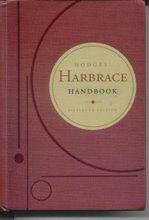
In the 1946 edition of Harbrace, University of Tennessee Professor John C. Hodges wrote, "Only a few distinctive forms of the subjunctive remain," noting the top two --
- Required Subjunctive -- chiefly in 'that' clauses of motions, resolutions, recommendations, order or demands." [e.g., "I demand that he see a physician."]
- Preferred or Optional Subjunctive -- especially in contrary-to-fact conditions and in expressions of doubts, wishes, or regrets. [e.g., "If the apple were ripe, it would be delicious."]
Hodges also made the distinction between formal and colloquial expression, giving four examples of colloquialisms we hear all the time, such as the one in the example above, "I wish that he was here."
More recent Harbraces state Rule 7d(2) as follows: The mood of a verb expresses the writer's attitude toward the factuality of what he or she is saying. The indicative mood makes statements--a definite attitude; the imperative mood issues commands or requests--an insistent attitude; and the subjunctive mood expresses situations that are hypothetical or conditional--a tentative attitude.
Indicative Dannice calls me every day.
Imperative Call me every day, Dannice
Subjunctive It is important that Dannice call me every day.
Examples of mis-subjunctification:
Atop our Sunday's "Week in Review" section of The New York Times stood the jarring headline: "If Bill Clinton Was President." It was corrected in later editions and on the Times website to read, "If Bill Clinton Were President."
Here's a similar case from the Knoxville News Sentinel a couple of years ago: "A photo from Tuesday's game showed [Pat Summitt] with her hand on [Shannon] Bobbitt's shoulder, delivering instructions as if she was whispering a secret in Bobbitt's left ear.
Tuesday, May 24, 2011
David Hunter's op-ed on grammar mistakes we see all too regularly
In his Knoxville News Sentinel column entitled (sic.) You're grammatical errors can cost you, former cop David Hunter notes a few mistakes we (unfortunately) see all the time.
Friday, May 20, 2011
Set off non-restrictive phrases or clauses in commas
Thursday, May 19, 2011
The challenge of putting "only" where it belongs
Note how the meaning in the following sentences changes according to the position of only.
She said that she loved only him. [She loved no one else.]
She said that she only loved him. [Even love has its limitations.]
She said that only she loved him. [No one else loved him.]
She said only that she loved him. [She said nothing else.]
Only she said that she loved him. [No one else said it.]
She only said that she loved him. [She didn't mean it.]
This is covered in Harbrace Chapter 25, entitled Coherence: Misplaced Parts, Dangling Modifiers, which starts with the straightforward advice, "Keep related parts of a sentence together. Avoid dangling modifiers."
Rule 25a: To make your meaning clear to readers, place modifiers near the words they modify.
Section 25(1) reads, "In formal English, place modifiers such as almost, only, just, even, hardly, nearly and merely immediately before the words they modify."
The placement of "only" and "just" can change the meaning of a sentence in any number of ways.
Here are several examples of misplaced "only"s:
From the Knoxville News Sentinel: "A Parade All-America, [tailback Gerald] Riggs only managed 256 yards before [coach Trooper] Taylor's arrival."
The point is that 256 yards were not that many, so the "only" should go next to 256. As the sentence reads now, it implies that Riggs only "managed" 256 yards--that is, he didn't do something else with them.
In another News Sentinel story, the point guard for the Christian Academy of Knoxville hoops team commented on a 6'5" youngster who had recently arrived at his school: "They said he was only playing baseball." [This could mean that he was doing the sport more for fun than for long-term ambition.]
The point guard meant to say, "They said he was playing only baseball,"-- that is, not playing basketball, as a 6'5" youngster should.
Before the college football bowl season a few years ago, the News Sentinel explained that UT fans had been asked to send in ticket requests for two bowl games, so the ticketing process would be further along when bowl selections were announced. In the story, an otherwise carefully worded sentence reads, "Fans are only obligated to purchase tickets for the bowl in which Tennessee plays."
With the word "only" placed as it is, the meaning of the sentence is that fans are only obligated to purchase tickets, they are not required or bound in some stricter way. To achieve the meaning intended, it should read, "Fans are obligated to purchase tickets only for the bowl in which Tennessee plays."