These tips come from no-nonsense Texan Laura Hale Brockway's excellent blog, impertinentremarks.com, and from Ragan's PR Daily:
Trash those lazy verbs.
A common problem with press release quotes is that they’re full of lazy corporate verbs such as synergize, utilize, leverage, or facilitate.
“We are leveraging cutting-edge technology to meet our customer’s needs.”
What does that even mean? Instead, describe your customer’s needs and how your product solves it: “Suppliers often do not have real-time access to customers. This app enables them to send secure, instant messages to anyone in the supply chain.”
Keep it conversational.
Another problem with press release quotes—particularly those from the CEO or another executive—is that your audience knows these quotes are made up.
When was the last time you actually heard someone say, “This new app will foster a new synergistic environment where suppliers and customers can leverage the new social media environment to communicate”?
Conversational quotes are more believable.
Can you paraphrase?
PR professionals are often given quotes from clients, and that may be all you have to work with.
How can you improve the quotes if you can’t go back to the client and ask for something else?
Can you paraphrase what’s been sent? Can you break up the quote? Do you have to use the quote at the beginning of the press release?
For example, take this quote:
“I plan to continue this legacy of providing innovative products and services to our customers. With over 30 competing companies for our customers to choose from, we have some challenges ahead. I am confident that we can meet those challenges successfully. And the first step is the release of our new app," says XYZ President and CEO John Johnson.
And turn it into this:
President and CEO John Johnson believes the release of the new app will provide customers with the communications tools they need, setting XYZ Company apart from more than 30 competitors.
Step up your interviewing skills.
Want better quotes? Ask better questions.
If you are interviewing the person you’ll be quoting, consider these interviewing techniques from Ken Metzler’s book Creative Interviewing: The Writer's Guide to Gathering Information:
• Ask for anecdotes. Is there a real-world example you can use to enliven your quotes?
• Ask for metaphors. How does the product or service compare to something familiar to your readers?
• Listen for crossroads and epiphanies. What led to the creation of the product or service? What were the stumbling blocks along the way? When did they realize it would work?
• Ask follow-up questions. If the interview is over and you don’t have what you need for a good quote, ask more questions.
Make your quotes worth quoting. Keep the language conversational and free of jargon. Paraphrase when possible. Ask probing questions.
Thursday, August 25, 2011

Tuesday, August 23, 2011
Behold the colon -- in punctuation, not anatomy
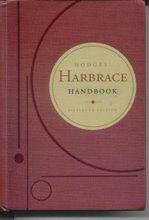
Harbrace 17d (p. 235 in the 17th edition) The colon
A colon calls attention to what follows. It also separates numbers in parts of scriptural references and titles from subtitles.
(1) A colon directs attention to an explanation, a summary, or a quotation.
When a colon appears between two independent clauses, it signals that the second clause will explain or expand on the first.
No one expected the game to end as it did: after seven extra innings, the favored team collapsed.
A colon is also used after an independent clause to introduce a direct quotation.
Marcel Proust explained the importance of mindfulness: "The true journey of discovery consists not in seeking new landscapes but in having fresh eyes."
Although an independent clause should always precede the colon, a phrase may sometimes follow it.
I was finally confronted with what I had dreaded for months: the due date for the final balloon payment on my car loan.
(2) A colon may signal a list that follows.
Writer frequently use colons to introduce lists
Three students received internships: Asa, Vanna, and Jack.
Avoid placing a colon between a verb and its complement (1c) or after the words including or such as.
The winners were Asa, Vanna, and Jack.
Many vegetarians do not eat dairy products such as butter and cheese.
(3) A colon separates a title and a subtitle.
Collapse: How Societies Choose to Fail or Succeed.
(4) Colons are used in reference numbers.
Colons are often used between numbers in scriptural references.
John 3:16
(5) Colons have specialized uses in business correspondence.
A colon follows the salutation of a business letter and any notations.
Dear Mr. Horner: Dear Maxine: Enc:
To: From: Subject: Date:
Tuesday, August 16, 2011
Common English phrases found in the King James Bible
 The list below comes from a very nice NPR story celebrating the 400th birthday of the King James Bible.
Though it cannot be said that all of these phrases originated in the Bible, notes NPR, it is likely that the King James Bible was the first time that many of them appeared in English.
Savvy reader Katherine Armour noted that NPR's report ignored the contribution of William Tyndale, whose translation accounts for 84% of the New Testament and 75.8% of the Old Testament books in the King James. (For his trouble, of course, Tyndale was executed. Sic semper literatus.)
A drop in the bucket (Isaiah 40:15)
A house divided against itself cannot stand (Matthew 12:25)
A man after his own heart (Samuel 13:14 or Acts 13:22)
A wolf in sheep's clothing (Matthew 7:15)
An eye for an eye, a tooth for a tooth (Exodus 21:24; Leviticus 24:20; Deuteronomy 19:21; Matthew 5:38)
Apple of your eye (Deuteronomy 32:10, Zechariah 2:8)
At their wits' end (Psalms 107:27)
Baptism of fire (Matthew 3:11)
Bite the dust (adapted from Psalms 72)
Broken heart (Psalms 34:18)
By the skin of your teeth (Job 19:20)
By the sweat of your brow (Genesis 3:19)
Can a leopard change its spots? (Jeremiah 13:23)
Cast the first stone (John 8:7)
Chariots of Fire (2 Kings 6:17)
Cross to bear (Luke 14:27)
Don't cast your pearls before swine (Matthew 7:6)
Eat drink and be merry (Ecclesiastes 8:15)
Fall by the wayside (Matthew 13:4)
Fall from grace (Galatians 5:4)
Fat of the land (Genesis 45:18)
Feet of clay (Daniel 2:31-33)
Fight the good fight (1 Timothy 6:12)
Fire and brimstone (Genesis 19:24-26)
Flesh and blood (Matthew 16:17)
Fly in the ointment (adapted from Ecclesiastes 10:1)
Forbidden fruit (Genesis 2:9)
From strength to strength (Psalms 84:7)
Give up the ghost (Mark 15:37)
Heart's desire (Psalms 21:2)
He who lives by the sword, dies by the sword (Matthew 26:52)
Holier than thou (Isaiah 65:5)
How the mighty are fallen (Samuel 1:19)
In the twinkling of an eye (1 Corinthians 15:52)
It's better to give than receive (Acts 20:35)
Labour of love (Hebrews 6:10)
Lamb to the slaughter (Isaiah 53:7)
Land of Nod (Genesis 4:16)
Law unto themselves (Romans 2:14)
Letter of the law (2 Corinthians 3:6)
Living off the fat of the land (Genesis 45:18)
Love of money is the root of all evil (Timothy 6:10)
Manna from heaven (Exodus 16:15)
Many are called but few are chosen (Matthew 22:14)
My cup runneth over (Psalms 23:5)
No rest for the wicked (adapted from Isaiah 57:20)
Nothing new under the sun (Ecclesiastes 1:9)
O ye of little faith (Luke 12:28)
Out of the mouths of babes (Psalms 8:2, Matthew 21:16)
Peace offering (Leviticus 3:6)
Pride goes before a fall (Proverbs 16:18)
Put words in her mouth (2 Samuel 14:3)
Put your house in order (2 Kings 20:1)
Reap what you sow (adapted from Galatians 6:7)
See eye to eye (Isaiah 52:8)
Set your teeth on edge (Jeremiah 31:30)
Sign of the times (Matthew 16:3)
Sour grapes (Jeremiah 31:30)
Sweat of your brow (Genesis 3:19)
Tender mercies (Psalms 25:6)
The blind leading the blind (Matthew 15:14)
The ends of the earth (Zechariah 9:10)
The root of the matter (Job 19:28)
The powers that be (Romans 13:1)
The salt of the earth (Matthew 5:13)
The spirit is willing but the flesh is weak (Matthew 26:41)
The Straight and narrow (Matthew 7:13/14)
There's nothing new under the sun (Ecclesiastes 1:9)
Two edged sword (Proverbs 5:4)V
oice crying in the wilderness (John 1:23)
Wages of sin (Romans 6:23)
Wash your hands of the matter (Matthew 27:24)
White as snow (Daniel 7:9)
Woe is me (Job 10:15)
Writing is on the wall (Daniel 5: 5/6)
Note: Most of these phrases are direct quotations. Others have slight word order changes that make the modern phrase quicker and catchier.
Friday, August 12, 2011
That pesky college application essay - the Times and its readers weigh in
Last week, The New York Times ran an interesting story about students using summer experiences to beef up their "personal statement" college application essays. This week, readers weighed in with their thoughts on the matter. Both are linked below.
N.Y. / REGION August 06, 2011 For a Standout College Essay, Applicants Fill Their Summers By JENNY ANDERSON Students preparing to apply to college are increasingly tailoring their summer plans with the goal of creating a better personal statement.
OPINION August 12, 2011 Letters: How to Make That College Essay Special Readers respond to a recent article about students pursuing activities over the summer than will help them write a strong essay for college applications.
One handy tip for writing application essays is to start the process in the summer months, when there might be time to look over the various topics on the applications, brainstorm ideas on an unrushed morning, and start a draft or two that can be revised upon a few days reflection (and many times thereafter).
Once the school year starts and those application deadlines start looming, it's much tougher to be clearthinking, fresh and original.
Tuesday, July 26, 2011
Apostrophe -- its use and abuse

 Garner
First, it often indicates the possessive case {Wright's treatise}.
Second, it frequently marks the omission of one or more elements and the contracting of the remaining elements into a word (or figure) -- e.g.: "never" into "ne'er"; "will not" into "won't"; "1997" into "'97."
Third, it is sometimes used to mark the plural of an acronym, number, or letter -- e.g.: "CPA's" (now more usually "CPAs"), "1990's" (now more usually "1990s"), and "p's and q's" (still with apostrophes because of the single letters).
Two contradictory trends -- both bad -- are at work with apostrophes.
First, careless writers want to form plurals with wayward apostrophes -- e.g.: "The bishop's [read 'bishops'] of the United Methodist Church have issued an urgent appeal for funds to assist the victims of flooding in the Midwest." Monte Marshall, "Special Offering for Flood Relief," United Methodist Rep., 3 Sept. 1993.
The same problem occurs in third-person-singular verbs: In the early 1990s, a sign at an Austin service station read, "Joe say's: It's time to winterize your car." And a distressing number of signs on mailboxes and entryways are printed, e.g., "The Smith's" [read "The Smiths"].
The second unfortunate trend is to drop necessary apostrophes: there is a tendency to write "the hotels many shops" or "Martins Pub." The only possible cure is increased literacy.
Finally, U.S. place names drop possessive and associative apostrophes by government policy. So, what was once Harper's Ferry, West Virginia, became Harpers Ferry.
In 1906, President Theodore Roosevelt charged the U.S. Board on Geographic Names with standardizing place names. One resulting policy is that each name become a "fixed label" so that, under this questionable rationale, "[t]he need to imply possession or association no longer exists."
Contracting apostrophes {Lake O' the Pines} and surname apostrophes {O'Bannon Mill} remain.
Monday, July 18, 2011
How to get perfect sixes on the SAT essay
 The SAT essay is scored by two readers, each of whom grades on a scale from 1 to 6. So you're aiming for two sixes -- boxcars in dice-throwing terminology.
In the story below, Tamar Lewin of The New York Times shows that you don't need to be perfect, or even have perfect spelling, to get a 6. To read the story and see several sample essays, click here.
One kid got a 6 even though he quoted from the musical Cats, which might earn an automatic 1 from some graders. Another did such a good job discussing Elie Wiesel's Night that the graders forgave his misspelling of "hindrance."
West High School English teacher Shannon Jackson, who grades AP essays, says that, indeed, graders are supposed to think of the esays as drafts, because of course that's what they are. So you truly can get a perfect 6 without being perfect.
Scoring The Essay Question
Perfect’s New Profile, Warts and All
By TAMAR LEWIN
Published: September 3, 2006
WHEN it comes to the SAT, perfect is now a whole lot harder. But take heart if you favor cursive over printing, the third person over the first, and more over less. You may have an edge.
More than 1,000 students got a perfect 1600 last year, when the college-admissions test consisted of the time-honored two 800-point sections, verbal and math.
But now that the test has been revamped and expanded to nearly four hours, with a new writing section that includes an essay, the average scores have dropped by seven points — and only 238 students received the new perfect score of 2400.
Technically, even perfect isn’t necessarily perfect. Students can get the top score even if they miss a few questions.
“We actually don’t know how many got a perfect perfect,” said Caren Scoropanos, a spokeswoman for the College Board.
What the College Board does know is that the top scorers comprised 131 boys and 107 girls, or just 0.017 percent of the almost 1.5 million college-bound seniors who took the test.
It seems to be the writing test that has made the number of perfects plummet. While the math and reading sections each had more than 8,000 top scores, only 4,102 students were rated perfect on the writing test, the only part of the exam where girls outscored boys.
Most of the writing test — and three-quarters of the writing score — consists of multiple-choice questions on grammar and usage. But most of the anxiety among high school students centers on the 25-minute essay, graded on a scale of one to six by at least two readers, who spend about three minutes on each essay. Their two scores are added. And, the College Board said, the reason so few students won top marks on the writing section is that so few — less than one percent — got sixes from both readers, for that perfect 12.
The SAT Scoring Guide says an essay gets a six if it “effectively and insightfully develops a point of view on the issue,” “demonstrates outstanding critical thinking,” “is well organized and clearly focused,” and “exhibits skillful use of language.” Grading is holistic, with no points off for spelling errors or small linguistic flaws.
Last week, when the board released 20 top-scoring essays, all on the topic of whether memories are a help or a hindrance, it was impossible not to notice that many were — what’s the right word? — awkward:
“Memory is often the deciding factor between humans and animals,” one started.
“It is a commonly cited and often clichéd adage that people learn from their mistakes,” wrote another.
“We reason only with information, that is, reason is the mortar that arranges & connects pieces of information into the palace of understanding,” said a third.
Ed Hardin, who helped develop the writing test for the College Board, has an explanation: “Someone has to get a six,” he said. “Student writing, over all, is not very strong, which is the reason we added the writing test to the SAT. We hope they’ll get better.
After analyzing the results, the board had these insights for the next crop of SAT-takers:
- Eighty-four percent of the essays took up more than one page, and longer essays were more likely to get a high score than shorter ones. (Two pages is the limit.)
- Most essays were printed, but those written in cursive got slightly higher scores.
- About half the essays were written in the first person, but those that did not use the first person got slightly higher scores.
And on the essay, at least, it’s possible to get a six without coming anywhere near perfect.
WHAT PRACTICE MADE? Misspellings are no “hinderance” to a perfect score on the SAT essay. Scorers looked for “clear and consistent mastery” in areas like critical thinking. They found it, apparently, in these essays, whose opening words are shown. Students were asked, “Do memories hinder or help people in their effort to learn from the past and succeed in the present?”
Friday, July 15, 2011
How to structure the SAT essay
 As mentioned in the post below, the essay section of the SAT presents an opportunity to excel for those who are prepared.
Below are tips from St. Albans School math teacher Linda DeBord. In her SAT-prep program, students compose two to five essays under test conditions, which Mrs. DeBord then assesses and scores.
"Learning to outline and write an essay under pressure was invaluable," said one student. "The corrected essays were also helpful, as we learned from our mistakes."
Of course a student should briefly outline the essay before writing. "In the brief 25 minutes, the up-front planning is critical," says Mrs. DeBord, "but the students need to keep a careful eye on the time.
"I suggest that in the opening paragraph, after they state their thesis, they should mention two examples they will use. The examples should be clear in their relationship in supporting the thesis.
"The conclusion should restate, in an interesting way (if possible), the thesis and then re-tie in the examples."
So, the structure of the essay goes pretty much --
- State thesis
- Preview two supporting examples
- Elaborate thesis
- Flesh out examples
- Conclusion
a) restate thesis (interesting way)
b) re-tie in the examples
Subscribe to:
Posts (Atom)