Monday, March 31, 2008

Avoid "rocking-horse" and "house-that-Jack-built" sentences


From Ways of Thinking and Writing by Frank W. Cushwa and Robert N. Cunningham (1936):

[Rule] 37. Avoid the "and" sentence; that is, a sentence in which and is used when there is no real coordination. Such sentences are sometimes called rocking-horse sentences. A good rule to remember is The fewer and's, the more effective the sentence. The remedy for the and fault is generally subordination.

Slipshod. My mother could not keep out the persistent rain, and I was thoroughly soaked before I reached my destination.

Much better. Since my slicker could not keep out the persistent rain, I was thoroughly soaked before I reached my destination.


[Rule] 39. Avoid what may be called the house-that-Jack-built sentences. They wander from one idea to another without purpose or plan. Sometimes the remedy is subordination; at other times the original sentence should be split up into shorter sentences. Sometimes both methods may be profitably employed.

Slovenly. Rawdon was the favorite of his Aunt Crawley, an old lady with immense fortune, the whole of which seemed destined to fall into his clutches, a fact which, in my opinion, was answerable for his singularly dissolute ways.

Better. Rawdon was the favorite of his Aunt Crawley, an old lady with immense fortune, the whole of which seemed destined to fall into his clutches. This fact, in my opinion, was answerable for his singularly dissolute ways.

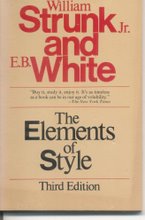
Note -- Excessively enthusiastic GTOTD subscribers might like to invest $10 on Amazon for a used copy of Ways of Thinking and Writing, which seems to be a parallel gospel to the hallowed works of William Strunk of Cornell and John Hodges of UT.
Reading the 550 pages of Ways of Thinking and Writing may be as close as we can get in today's world to experiencing what it was like in one of those classrooms in the 1930s.

Friday, March 28, 2008

Stubborn, obtuse, sullen -- are the SAT folks hinting at something?

Are there times, perhaps, when the SAT Question of the Day seems to have a bit of an attitude about young folks?

Mrs. Williams found it ironic that her twelve-year-old son, who made all A’s on his report card, was so ------- at home, apparently unable to follow her most basic instructions concerning such commonsense matters as tidiness.

a) stubborn
b) astute
c) candid
d) obtuse
e) sullen

Thursday, March 27, 2008

In the Mood . . . for the Subjunctive

From the Knoxville News Sentinel a year ago: "A photo from Tuesday's game showed [Pat Summitt] with her hand on [Shannon] Bobbitt's shoulder, delivering instructions as if she was whispering a secret in Bobbitt's left ear.

Harbrace (14th edition) Rule 7d(2): The mood of a verb expresses the writer's attitude toward the factuality of what he or she is saying. The indicative mood makes statements--a definite attitude; the imperative mood issues commands or requests--an insistent attitude; and the subjunctive mood expresses situations that are hypothetical or conditional--a tentative attitude.

Indicative Dannice calls me every day.

Imperative Call me every day, Dannice

Subjunctive It is important that Dannice call me every day.

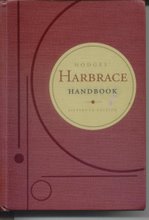
What the heck do we do with the subjunctive mood? Even between the 14th and 15th editions of the Hodges' Harbrace Handbook, the editors made some changes to the section on mood.
Neither one of those sections is much of an improvement over what University of Tennessee Professor John C. Hodges had in his 2nd edition, back in 1946.
"Only a few distinctive forms of the subjunctive remain," wrote Hodges, who went on to describe the top two, the --

Required Subjunctive -- chiefly in 'that' clauses of motions, resolutions, recommendations, order or demands." [e.g., "I demand that he see a physician."]

Preferred or Optional Subjunctive -- especially in contrary-to-fact conditions and in expressions of doubts, wishes, or regrets. [e.g., "If the apple were ripe, it would be delicious."]

Hodges also made the distinction between formal and colloquial expression, giving four examples of colloquialisms we hear all the time -- e.g., "I wish that he was here."

"Many writers don't know what that subjunctive case is, using 'was' when 'were' is correct," observes David Burns of Knoxville, who had Hodges for freshman English in 1950 and still has his copy of that 1946 edition of the Harbrace College Handbook, inscribed by Hodges himself.
"He was a grammarian through and through," says Burns. "I think of him when I read even magazines that have good writers and see one grammatical error after another." Burns remembers Hodges' particular insistence about the use of the gerund: "It is a noun, not a verb. I appreciate your coming not you coming."
"He was an imposing presence," Burns remembers. "There was no mistaking that he was around. I never heard the first critical comment about him, and I don't think you could find anyone who would have. He was simply one of the finest gentlemen I ever knew."

Wednesday, March 26, 2008

March Madness Malaprops

At NCAA tournament time, we celebrate "student-athaletes" (the extra "a" seems to sound more scholarly, so announcers add it).
No one wants to be "lacksadaisical" on defense. Network announcers who say this may assume that the word refers to someone who lacks "adaisicality," which sounds like something akin to "gumption." Actually, the word "lackadaisical" comes from "lackaday," an alteration and shortening of the archaic interjection "alack the day," used to express regret.

Of course we all get "flustrated" with the officiating -- something between flustered and frustrated -- but in the end it's always a "mute" point. (It should be "moot" [deprived of practical relevance; no longer at issue], not "mute" [unable to speak].)

And we all enjoy the interesting "antidotes" gathered by courtside reporters, especially when they include "self-depreciating" comments from the coaches. (Should be "anecdotes" and "self-deprecating.")

Lackaday! It all makes us yearn for the days of the St. Louis Cardinal pitcher and radio announcer Dizzy Dean, who once described a base runner, having "slud" into a base, as standing there "cool and confidential."

Malapropisms, or malaprops (both are correct) are the misapplications of words, usually humorous, specifically, the use of words sounding somewhat like the ones intended but ludicrously wrong in their contexts. The words come from a character, Mrs. Malaprop, in a 1775 R.B. Sheridan comedy.

Yogi-isms are apparently-nonsensical-but-often-sagacious malapropisms created by longtime Yankee catcher and manager Yogi Berra, who once received an honorarium check for a speech made out to "Bearer" and asked of his host, "You've known me all these years and still don't know how to spell my name?"

Tuesday, March 25, 2008

Shall and will -- more recent rules

Several days ago we revisited a long list of rules from the 1930s about the use of "shall" and "will" that are basically no longer observed in our language.

Some GTOTD subscribers asked what the current rules are.

In current editions of Harbrace, there are hardly any mentions of "shall" and "will" at all. In section 7c (2) on the subjunctive mood, there is a small note that reads, "The indicative is displacing the use of the subjunctive, just as will is displacing shall -- except in questions such as "Shall we go?"

If we go back to the first edition of Harbrace, from 1941, Professor Hodges followed up his section on the subjunctive (then 7e) with the following page-long section on Shall and Will:

7f. Use the correct form for shall (should) and will (would).
Informal English is rapidly dropping the distinctions between shall and will, should and would. Except for the use of should to express an obligation (see below), the tendency is to use everywhere will and would.

But careful usage still observes the following rules:

(1) To express the simple future tense use shall (should) in the first person and will (would) in the second and third.
RIGHT . . . I shall stay. He will go. You will find me at home. We shall expect you.

(2) To express determination (or in making a promise) use will (would) in the first person and shall (should) in the second and third.
RIGHT . . . I will help. You shall have your reward. He shall not obstruct our passage.

(3) In questions, use the form expected in the answer.
RIGHT . . . Shall you remain longer in the country? [Answer expected: I shall, or I shall not.]
RIGHT . . . Will you go in spite of all the dangers? [Answer expected: I will; I am determined to go.]

(4) Use should in all persons to express an obligation.
RIGHT . . . I (you, he, we they) should help the needy.

(5) Use would in all persons to express customary or habitual action.

RIGHT . . . I (you, he, we they) would take a vacation at the end of the summer.

Monday, March 24, 2008

Laissez-faire -- not so good when it comes to subprime mortgages

From the Financial Times: "Dubai has long positioned itself as a regional business hub, with a laisser faire attitude to business regulations."

I thought "laisser faire" was a mistake, until I looked in the dictionary and saw that "laisser faire" is a "chiefly British variation of laissez-faire."

Laissez-faire noun [laissez-faire is the imperative of laisser faire to let (people) do (as they choose)]
a doctrine opposing government interference in economic affairs beyond the minimum necessary for the maintenance of peace and property rights [and unlimited subprime mortgages] -- adj. laissez-faire

Friday, March 21, 2008

Shall and will -- a distinction lost to the ages, but interesting

The rules below are from a "Concise Handbook of Composition," 33 pages at the end of Ways of Thinking and Writing by Phillips Exeter Academy professors Frank W. Cushwa and Robert N. Cunningham (Charles Scribner's Sons, 1936).
The distinction between "shall"and "will" is pretty much lost to the ages -- but it can be interesting to us as grammar historians.

III. Usage
22. Remember the rules for shall and will.
(a) To indicate merely that action will take place in future time, use
I shall . . . . . . we shall
thou wilt (you will) . . . . . . you will
he (she, it) will . . . . . . they will

(b) To indicate that the speaker is determined to do a thing or to have it done, is willing to do it, or is making a promise, use

I will . . . . . . we will
thou shalt (you shall) . . . . . . you shall
he (she, it) will . . . . . . they shall

(c) In questions, use shall in the first person in the first person except when the speaker is repeating verbatim a question which has just been asked him. In the second and third persons, use the auxiliary which, in accordance with rules (a) and (b), would naturally be used in the answer. The person of the question will often differ from that of the answer.

Examples:
  • Where shall I leave your books? [Not Where will I?]
  • Will I go? I certainly will. [The speaker echoes the original question.]
  • Shall you be in Boston on Saturday? If all goes well, I shall. [The answer indicates simply that the speaker expects to be in Boston on Saturday.]

Will you meet us in town? Yes, I will. [That is, I promise to.]

(d) In an indirect statement, use the auxiliary which would be required if the statement were direct. The person of the original verb changes to suit the indirect discourse.

Examples:

  • He says that he will attend to my case at once. [The speaker said, "I will (that is, I promise to) attend to your case at once."]
  • He says that hirhday next month. [The direct statement was, "I shall have a birthday next month."]

    NOTE 1. Should and would follow the same rules as shall and will except when should expresses obligation [No man should forget his duty to his country], or when would indicates customary or habitual action [I would sit by the hour playing my flute].
    To express obligation, use should in all three persons. To espress customary action use would in all three persons.

    NOTE 2. I would like, a common error, is always wrong. In would and like the idea of volition is expressed twice. Say always, "I should like."

    Here in the 21st Century, we can all ask, "Who knew?"